EST : Eastern Time
-
Symposium: Navigating Doubt: Research in Service of Democracy
Drawing RoomThursday, November 12 9:00 AM - 4:00 PM
Speaker(s)
Sponsors
-
Symposium: Opening Remarks
Drawing RoomThursday, November 12 9:00 AM - 9:15 AM
Speaker(s)


-
Symposium: KEYNOTE | Why Trust Researchers? On Building the Capacity to Communicate In a Skeptical Age
Drawing RoomThursday, November 12 9:15 AM - 10:15 AM
Speaker(s)
Knowledge mobilization is a crucial part of our job as scholars, but problems like online harassment are discouraging many researchers from communicating with wider publics. Dr. Tworek will place these problems into historical perspective and then suggest how universities can enable researchers to communicate beyond the academy. [Keynote presenting in English}
-
SYMPOSIUM: PANEL | SCIENCE AND PUBLIC DEBATE: QUESTIONING WITHOUT MISINFORMING
Drawing RoomThursday, November 12 10:15 AM - 11:45 AM
Speaker(s)
In a context marked by polarization, misinformation, and evolving relationships between science and society, this panel will explore the role of doubt in contemporary democracies. Discussions will be organized around three themes: the role of doubt in science and democracy, the place of researchers in the public sphere, and the responsibility of universities and research institutions in addressing declining public trust. [Billingual Panel]
-
SYMPOSIUM: TREATING, INFORMING, REASSURING: TRUST UNDER STRAIN DURING COVID-19
Drawing RoomThursday, November 12 1:00 PM - 2:15 PM
Speaker(s)Moderator
This talk will explore the challenges faced by health care systems and health care professionals during the COVID-19 pandemic. In a context of uncertainty and misinformation on social media, healthcare professionals were put to the test not only in their capacity to provide safe and effective care, but especially also in their responsibility to share evidence-based information and promote public health measures. This climate of mistrust and misinformation eroded public confidence in COVID-19 vaccination and in the implementation of and compliance with public health measures designed to control the transmission and community spread of COVID-19. This talk will explore the challenges faced by health care systems and health care professionals during the COVID-19 pandemic. In a context of uncertainty and misinformation on social media, healthcare professionals were put to the test not only in their capacity to provide safe and effective care, but especially also in their responsibility to share evidence-based information and promote public health measures. This climate of mistrust and misinformation eroded public confidence in COVID-19 vaccination and in the implementation of and compliance with public health measures designed to control the transmission and community spread of COVID-19. Drawing on the lessons learned from this unprecedented health crisis, we will discuss how we can restore trust in science and in public health institutions, by strengthening transparent and compassionate communication; we will also address the need to counter health-related misinformation to foster constructive engagement with communities. Finally, we will consider strategies aimed at better preparing healthcare professionals, institutions, and public health systems for future emergencies arising from emerging infections, placing trust, fairness, and solidarity at the heart of the preparation for and response to future pandemics. [Presented in French with bilingual Q&A]
-
The Military “Turn” in Canada: A Roundtable Discussion
Renaissance RoomThursday, November 12 2:00 PM - 4:00 PM
Speaker(s)
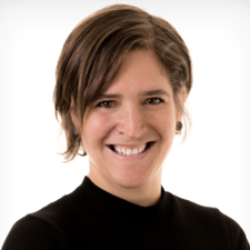
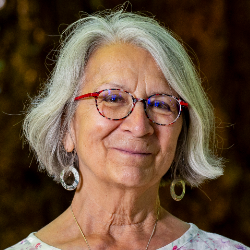
G7 countries have committed to a significant increase of defence spending not seen since the end of WWII. In Canada, the discourse of “resiliency” and taking a “realist approach” (attributed at times to Thucydides made anew in Carney’s Davos speech) has meant a transformational commitment: defence security for economic benefit (“dual-use”), increased recruitment into the Canadian Armed Forces (CAF), and the reorienting of our established priorities through the lens of defence needs. Yet this has all taken place largely without a national discussion on what this dramatic social, cultural and economic turn might mean for Canadian society: the militarization of our democracy.
-
Symposium: Critical Wrap-Up
Drawing RoomThursday, November 12 2:30 PM - 3:30 PM
Speaker(s)
Having followed the day’s discussions from start to finish, Professor Yves Gingras will share his critical perspective and shed light on the key questions that emerged. [Presented in French with bilingual Q&A]
-
Symposium: Closing Remarks
Thursday, November 12 3:30 PM - 3:45 PM
Speaker(s)
-
Designer-ish Babies: Gattaca Stack & Prediction Markets
Drawing RoomThursday, November 12 4:30 PM - 5:30 PM
Speaker(s)
Designer babies, once found only in science fiction, are now a reality and, in the not-too-distant future, one can imagine a world in which prospective parents can shop for designer babies at genetic supermarkets or request designer babies made-to-order. This talk will explore how available technologies, including CRISPR genome-editing technology for reproduction, will dramatically change our world.

-
Opening Reception and Welcome to Ottawa
Adam BallroomThursday, November 12 6:30 PM - 9:00 PM
Speaker(s)
Let the festivities begin! The Welcome reception formally opens COEE2026.
-
RSC 101 Breakfast
Drawing RoomFriday, November 13 7:30 AM - 9:00 AM
Speaker(s)
-
2026 RSC Awards Ceremony
Adam BallroomFriday, November 13 9:00 AM - 10:30 AM
Speaker(s)
Sponsors
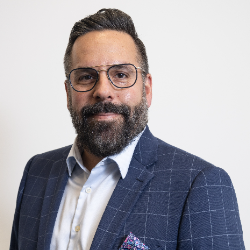
Each year the RSC presents a series of prestigious awards and medals to honour individuals selected for their exceptional contributions.


-
Presentation of the 2026 New Members of the College
BallroomFriday, November 13 10:30 AM - 12:00 PM
Speaker(s)
This ceremony welcomes new Members of the College in a format that showcases the interdisciplinary character of the College.


-
Celebration Lunch
Drawing RoomFriday, November 13 12:00 PM - 2:00 PM
Sponsors
Join us to celebrate the Class of 2026!

-
Induction Ceremony – Class of 2026 New Fellows
BallroomFriday, November 13 2:00 PM - 5:00 PM
Speaker(s)
Sponsors
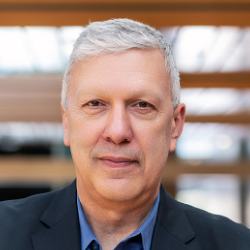
This ceremony welcomes new RSC Fellows into the RSC. During this event, new Fellows sign their names into RSC’s original and historic Charter Book and are presented with a Diploma and RSC lapel pin


-
Induction Cocktail Reception
Drawing RoomFriday, November 13 5:30 PM - 7:30 PM
Speaker(s)
Sponsors
Celebrate the Class of 2026 and raise a glass in honour of the new RSC Members, Fellows and Awards Winners.
-
RSC Annual General Meeting
BallroomSaturday, November 14 8:00 AM - 9:00 AM
Speaker(s)
At the Annual General Meeting (AGM), the membership elects RSC Board of Directors, and receives the RSC’s financial statements.
-
RSC College Meeting
Laurier RoomSaturday, November 14 9:30 AM - 11:30 AM
Speaker(s)
Meetings of the RSC College provide an opportunity for members to receive a report from the College leadership about the selection process leading to new members, and to strategize next steps in inclusive excellence.
-
Member Presentations
BallroomSaturday, November 14 10:00 AM - 11:30 AM
Speaker(s)Presenter
Sponsors
Lightning talks aim to share deep insights within six minutes each. They are opportunities for new and current Members to introduce their work and to share areas of ongoing and emerging focus. More details to come.
-
Frontiers Planet Prize Luncheon Lecture | Betting on carbon dioxide removal to stabilize the climate
Drawing RoomSaturday, November 14 12:00 PM - 1:30 PM
Speaker(s)
Despite remarkable growth in low-carbon generation worldwide, integrated assessment models of the global climate and energy system suggest that carbon dioxide removal technologies must be deployed at large scale to stabilize the climate. Among the most prominent of these is the direct air capture of carbon dioxide. The Canada Energy Regulator foresees up to 46 million tons of carbon removal with direct air capture by 2050. Despite the anticipated need for these technologies, analysts and policy makers have not yet explored the full implications of large-scale deployment. This talk will introduce a research stream at Carleton University that evaluates the technical performance of direct air capture technologies in collaboration with partners, as well as their real economic implications and the suite of policies required to support them. It will introduce new engineering models and decision tools that have been developed to paint a picture of what a direct air capture industry might look like and places these numbers in context relative to low-carbon energy generation technologies. The energy transition involves trade-offs and comprises; neither prudent policymaking nor societal acceptance can be achieved without articulating the benefits and costs of a large carbon dioxide removal enterprise. -
Romanowski Award Luncheon Lecture | Ecological Networks in Dynamic Landscapes
BallroomSaturday, November 14 12:00 PM - 1:30 PM
Speaker(s)
The Romanowski lecture features a discussion of some of the greatest challenges facing the environment, and research that is contributing to addressing these challenges.
Marie-Josée Fortin, the 2025 recipient of the RSC’s Miroslaw Romanowski Medal for scientific work relating to environmental problems will deliver this year’s luncheon lecture titled, “Ecological Networks in Dynamic Landscapes”.
Network ecology allows ecologists to conceptualize and model complex and dynamic ecological systems. Here, I present how parallel developments in spatial ecology and ecological network theory and their applications in a spatial context have converged, enabling better selection of protected areas forming interconnected networks, the conservation of ecological corridors, and the management of ecosystem services. In doing so, I address the trade-offs related to network topology and the ecological responses of species when landscapes are dynamic, at the levels of nodes (plots, communities), links (distances and dispersal rates of species, corridors), and the network itself (species abundance, species traits, species generation times, redundancy of trophic interactions). A series of case studies will be presented, ranging from the modification of interactions between species to the monitoring of ecosystem services.
-
RSC Eric Jackman Prize Luncheon Lecture | Advancing Population Health and Global Health Policy Through Social and Behavioural Science
Adam BallroomSaturday, November 14 12:00 PM - 1:30 PM
Speaker(s)
The RSC Eric Jackman Prize in the Human Behavioural and Social Sciences was established in 2025 with the support of a generous endowment from the Jackman Foundation to recognize path-breaking and sustained scientific contributions to preventing harm, strengthening resilience, or otherwise benefiting humankind through research in one or more behavioural and social science fields.
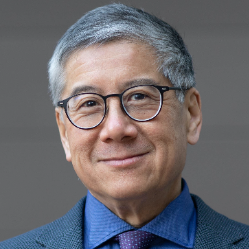
Professor Geoffrey Fong, the recipient of the 2026 RSC Eric Jackman Prize will deliver this year’s luncheon lecture titled, "Advancing Population Health and Global Health Policy Through Social and Behavioural Science".
This lecture describes how social and behavioural science theories, measures, and research designs shaped the creation of the International Tobacco Control Policy Evaluation (ITC) Project—the most extensive source of evidence on policy impact under the global tobacco control treaty, the WHO Framework Convention on Tobacco Control (FCTC). Since 2002, ITC has conducted landmark longitudinal cohort surveys in 31 countries covering over half the world’s population. Guided by the ITC Conceptual Model, the surveys incorporate extensive measures derived from social and behavioural science theories, enabling detailed evaluation of policy impact and the psychological and behavioural processes through which policies work. Through publications and engagement with governments, WHO, the FCTC Convention Secretariat, and key national, regional, and global civil society organizations, ITC evidence has strengthened and accelerated policies worldwide, including warning labels, comprehensive smoke-free laws, plain packaging, and menthol cigarette bans. A new CIHR Project Grant is supporting the first phase of the Global Prevention of Disease (GPrev) Project, combining evidence synthesis, ITC’s mediational model, and simulation modelling to project long-term policy health benefits in five low- and middle-income countries, including China. GPrev advances a broader vision of “translational preventive medicine”: synthesizing evidence on policies to reduce tobacco use, alcohol use, and unhealthy diets and projecting their health and economic benefits globally, with particular attention to their potential to reduce health inequities.


-
Academy of Arts & Humanities Meeting
Laurier RoomSaturday, November 14 2:00 PM - 4:30 PM
Speaker(s)Presenter
The meetings of the Academy provide an opportunity for members to receive a report from the Academy leadership about the selection process leading to new members, and to strategize next steps in inclusive excellence. -
Academy of Social Sciences Meeting
Drawing RoomSaturday, November 14 2:00 PM - 4:30 PM
Speaker(s)Presenter
The meetings of the Academy provide an opportunity for members to receive a report from the Academy leadership about the selection process leading to new members, and to strategize next steps in inclusive excellence. -
Academy of Science Meeting
BallroomSaturday, November 14 2:00 PM - 4:30 PM
Speaker(s)Presenter
The meetings of the Academy provide an opportunity for members to receive a report from the Academy leadership about the selection process leading to new members, and to strategize next steps in inclusive excellence.



-
RSC Annual Gala (Tickets to be purchased separately)
Trillium Ballroom - Rogers CentreSaturday, November 14 7:00 PM - 9:30 PM
Speaker(s)
-
Departing Breakfast
Laurier RoomSunday, November 15 8:00 AM
Bring the conference to a close with a delightful breakfast. Take a moment to enjoy the morning with colleagues, or pick up something to take with you as you depart.
-
Board & Council Meeting
Drawing RoomSunday, November 15 9:00 AM - 1:00 PM