Schedule
-
Networking Breakfast
Grand Salon OperaFriday, October 16 7:30 AM - 8:30 AM
Start your day with a healthy breakfast and the opportunity to connect with colleagues, partners, and members of the global health community.
-
CCGH 2026 Opening Ceremony
Grand Salon OperaFriday, October 16 8:30 AM - 9:30 AM
Presenting Author
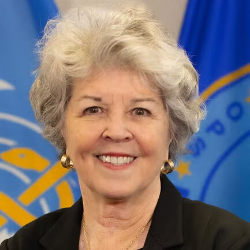
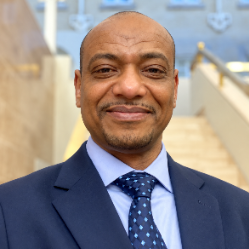
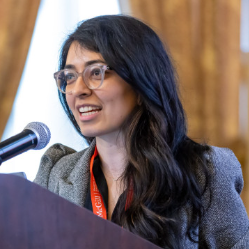
Kick off CCGH 2026 with a warm welcome from Dr. Saad El-Din Hassan, Chair of CAGH and Senior Health Advisor with the Canadian Red Cross. This will be followed by a territorial welcome from Elder Dr. Alex McComber, Assistant Professor at McGill University, representing the Kahnawake Territory, and a keynote address from Dr. Mary Lou Valdez, Deputy Director of the Pan American Health Organization (PAHO), Regional Office of the World Health Organization (WHO).
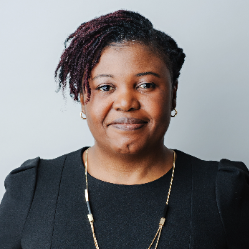
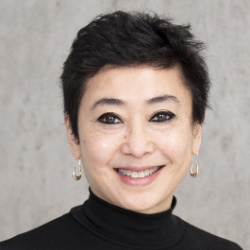
You’ll also hear from our CCGH 2026 Conference Co-Chairs, Dr. Charity Oga-Omenka, Assistant Professor at the University of Waterloo, and Dr. Muriel Mac-Seing, Assistant Professor at Université de Montréal, as they co-lead a collective opening.

-
PLENARY 1 - Transforming Global Health Now: Addressing Upstream Determinants of Health Equity for All
Grand Salon OperaFriday, October 16 9:30 AM - 11:00 AM
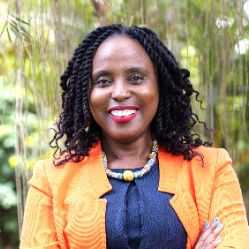
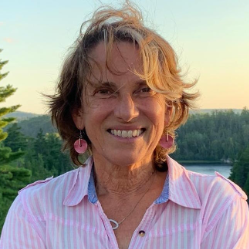
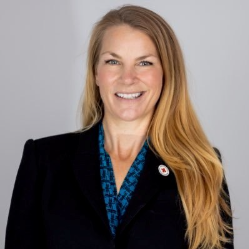
Presenting AuthorModerator
This plenary explores the systemic forces that shape global health inequities, including debt structures, inequitable economic systems, political instability, and colonial legacies. It asks critical questions: Who holds power in global health decision-making and financing? Who benefits from current systems? And how can we strengthen country ownership, Global South leadership, equitable financing, public-sector capacity, and inclusive governance?
Background:
This plenary explores the systemic forces that shape global health inequities, including debt structures, inequitable economic systems, political instability, and colonial legacies. It asks critical questions: Who holds power in global health decision-making and financing? Who benefits from current systems? And how can we strengthen country ownership, Global South leadership, equitable financing, public-sector capacity, and inclusive governance? This plenary will address key issues and will focus on:
- Articulating how governance structures, colonial legacies, political and financial determinants, and power dynamics contribute to persistent health inequities;
- Critically assessing current global health governance (including financing models), recognizing key power imbalances and opportunities for systemic reform;
- Identifying practical strategies for advancing equitable global health governance through stronger country ownership, Global South leadership, and South-South collaboration;
- Exploring opportunities for cross-sector partnerships and collective action to address upstream determinants of health and advance health equity.
Learning Objectives:
By the end of this session, participants will be able to:
- Analyze how systemic barriers, including debt structures, inequitable economic arrangements, political instability, and colonial legacies, function as root causes of health inequities.
- Assess the influence of power dynamics within global health governance and financing systems and identify approaches that strengthen country ownership and Global South leadership.
- Apply policy and practice approaches that address upstream determinants of health, including strengthening public sector capacity, promoting equitable financing, and advancing inclusive governance.
Methodology / Session Format:
A 90-minute plenary session through a Moderated Expert Panel. Audience Engagement will be solicited through a Q&A session with the conference participants (20-25 minutes).
-
POSTER VIEWING / EXHIBITS / NETWORKING BREAK
SopranoFriday, October 16 11:00 AM - 11:30 AM
Presenting Author
Sustainable Domestic Financing in Health Systems: A Case Study of Nepal on the Impact of Declining Development Assistance for Health Using Kingdon's Multiple Streams Framework
Sagun Paudel
Unequal Exposure: Air Pollution, Structural Inequities, and the Burden of Chronic Disease in Canada
Timilehin Taiwo Olaleye, Damilare Adetona, Fredrick Akinyosoye, Wuraola Awosan, Tawakalt Bashir
Gender-based power inequities and bacterial vaginosis among adolescent girls and young women in South Africa
Amanda Rowlands, Campion Zharima, Mags Beksinska, Kalysha Closson, Tatiana Pakhomova, Smritee Dabee, Mzikazi Nduna, Julie Jesson, Thumbi Ndung'u, Janan J. Dietrich, Stefanie Vermaak, Mark Brockman, Angela Kaida
Migration and early motherhood in Canada: A cross-sectional study on transnational connections and mental health
Lisa Merry, Julie Goulet, Christine Gervais, Garine Papazian-Zohrabian, Isabelle Archambault, Roxane Caron, Olive Wahoush, Christine Kurtz Landy, Bukola Salami , Kemi Amodu, Anna Kirova
Analyse des performances des interventions de soutien, de dépistage et de maintien dans les soins VIH au Sénégal : données programmatiques du RNP+ enregistrées en 2025
Khady Sy, Saliou Mbacké Gueye, Abdoulaye Dia
Latest Evidence on Zero-Dose Children in Low- and Middle-Income Countries: A Living Scoping Review
Audrey Beaulieu, Joelle Ducharme, Bangaman C. Akani, Marion Perrot, Gustavo C. Corrêa, Céline Thibeault, Heidi W. Reynolds, Ziegler Daniela, Dan Hogan, Esther Saville, Mira Johri
Integrating Private Sector Providers into Social Health Insurance to Advance Universal Health Coverage in Nigeria
Delafrida Ukaga, Emeka Okafor, Michael Alagbile
Strengthening Health Equity through Governance and Surveillance Systems: Addressing Upstream Determinants in Fragile and High-Burden Settings
Yonas Assefa Tufa, Yonas Tufa, Fasika Argaw, Yonas Assefa Tufa
Toxic Legacies: Caregivers' Perspectives on Environmental Pollution and Child Health in Sudbury
Rhea Mukerjee
An Equity Playbook in Action: Improving Mental Health Access for Perinatal Refugee Women
Dr. Shahin Kassam, Dr. Joyce O'Mahony, Dr. Lenora Marcellus
High TB/HIV Awareness with Sub-National Gaps: Evidence from Urban and Rural Communities in Kano and Oyo States, Nigeria
Stella Atema Ijioma, Charity Sanni, Joseph Ozigbo, Edward Kombo, Miriam Bathnna, Peter Oluwaseun , Kazeem Ayodeji , Veronica Ajuka-Patrick , Adetola Adegoke, Husna Ma'ab Baffa, Muideen Isa, Bello Hasiya, Opeyemi Adebayo, Temitope Adetiba, Mary Kinmilola Olayemi , Aderonke Vivan Agbaje , Patrick Dakum, Evaezi Okpokoro , Margaret Zamzu
School Closures as a Public Health Shock: Adolescent Sexual and Reproductive Health in Anglophone Cameroon
Wacha Roose, Kiyam Lamech
Grant-Funded, System-Starved: GHI Human Resource Financing and Domestic Workforce Fragility in Pakistan
Mariyam Sarfraz, Mariyam Sarfraz, Namrah Rafiq
MAGNITUDE AND FACTORS ASSOCIATED WITH DELAYED DIAGNOSIS OF BREAST CANCER IN HAWASSA UNIVERSITY COMPREHENSIVE SPECIALIZED HOSPITAL ONCOLOGY CENTER, HAWASSA, ETHIOPIA, 2025
Bereket Akako, Bereket Akako
Safeguarding Polio Eradication Under Fiscal Constraint: A Scoping Review of Transmission, Immunization Coverage, Response Timeliness, and Contextual Vulnerability
Tambe Elvis Akem, Florence Gyembuzie Wongnaah
Diagnostic delay as structural violence: Gender, knowledge, and inequity in women's health
Silvana Matassini
Global Health Diplomacy during the COVID-19 Pandemic: Resource Acquisition in Ethiopia - Challenges and Opportunities. Qualitative research
Hawi Degu
Factors Associated with Advanced HIV Disease Among People Living with HIV at Yaoundé Central Hospital, Cameroon
Ntambara Steven
Geospatial Identification of Zero-Dose Children in Low- and Lower-Middle-Income Countries: A Scoping Review of Spatial Data, Methods, and Critical Gaps
Absolomon GASHAIJA
Santé sexuelle et VIH chez les adolescents et jeunes au Cameroun : Innovations, défis et leviers communautaires pour restaurer l'équité
Guy Parfait KEDI, Joseph FOKAM, Annick Marcelle ESSONO ASSOMO
Addressing Structural Drivers of Teenage Pregnancy in Nigeria: Evidence from a Community-Based Study in Ondo State, Nigeria
Folakemi Kayode-ojo, Folakemi Kayode-ojo, Olukayode Ojo
Unequal Risk of a Global Game: Governing Injury Surveillance in a Growing Sport
Paul Mokrzycki, Paul Mokrzycki, Bruce Newbold, Grzegorz Chrobak, Przemysław Banat, Jakub Łach, Reeya Kothari
Transgender Health Equity in China: An Intersectional Analysis across Global Health, Law, and Human Rights
Qiumeng Sun, Qiumeng Sun
Assessing Gaps in Integrated Disease Surveillance and Response (IDSR) in Sindh, Pakistan: Implications for Pandemic Preparedness and Global Health Security: A Mixed-Methods Cross-Sectional Study, 2025
Muhammad Asif Syed, Muhammad Asif Syed, Naveeta Pardeep Bai, Muhammad Ali Abro
Health System Outcomes of Provider Payment Reforms in Sub-Saharan Africa: A Scoping Review
Fitsum Woldeyohannes
Reclaiming Equity in Family Planning: Patterns and Determinants of Modern Contraceptive Use in Mozambique
Nahin Shakurun, Nahin Shakurun, Fernanda Andre, Nazeem Muhajarine
Community engagement for health equity. The case of ' Save Deux-Branches', Dominica
Patrick Cloos, Jeanelle Brisbane, Garry Auguiste, Patrick Cloos, Patrick Cloos
Climate-Related Health Risks for Women in Poverty: A Systematic Review
Mariam Farooq, Amber Fletcher, Robert Meade, Mariam Farooq, Mariya Bezgrebelna, Maya Zaidan, Leanne Lacap, Huy Nguyen, Nick Kerman, Jolly Noor, Erin Flanagan, Gyeongwon Kwak, Yukta Sharma, Kimberly Fung, Siqi Xue, Glen Kenny, Daisy Singla, Maya Gislason , Sean Kidd
Addressing Upstream Determinants of Health Equity: Strengthening Governance, Leadership, and Financial Stewardship for Inclusive Global Health
Dr. Dua Khan
Reclaiming health equity and addressing malnutrition through diaspora engagement: A case of a marginalized village community in post-war Northern Sri Lanka
Prabu Nadaraja, Shribavan Kanesamoorthy
Climate Change as an Upstream Determinant of Health: Understanding International Students' Perception of Climate Change Through Photovoice in Canada
Nomusa Mngoma, Bharati Sethi, Allison Williams, T. Claire Davies, Rubee Dev, Kelvin Fong
Surveillance in the Wake of Disaster: Pakistan's Climate-Adapted IDSR Model During the 2022 Floods
Saeeda Bibi, Huma Khattak, Ali Rehman Khan, Asif khan
Upstream of the infodemic: A scoping review of the political economy of health information networks in Latin America across contested public health issues
Miranda Bain, Hannah Hagos, Isabel Munoz Beaulieu
Climate, Migration, and Health Inequities in West Africa
Oscar Lambert, Sadat Ibrahim, Obed Atsu-Ofori
Why More Money Is Not Enough: Evidence from Facility-Level Expenditure Tracking on Financial Accountability in Primary Health Care in Nigeria Background
Uchechukwu Ezenwa Ezeh, Dr Yewande Ogundeji, Abolade Oyelere, Kayode Samuel Alabi, Ibrahim Ibrahim, Hajara Nakkudu, Peace Olawepo, Ruth Musa Sunama, Dorcas Asuku, Muhammad Awwal Waziri
Negotiating Authority and Belonging: An Intersectionality-Informed Analysis of Organizational Culture and Transition Experiences of Internationally Educated Nurses working In Ontario, Canada.
Mehtab Jaffer, Yolanda Babenko-Mould, Saleema Allana
"Working Within the System": How Policy, Funding, and Service Gaps Shape Disability Support in Guatemala
Valeria Acosta, Caitlin Piccone, Tesfaye Tebekie, Heather Aldersey
Profile of Tuberculosis and HIV co-infecting patients in a Teaching Hospital in Ghana.
Nicholas Mensah Karikari , Francis Osei Adjei , Samuel Odoom Frimpong , Charles Martyn-Dickens , Diana Adutwumwaa
Women's political empowerment and cross-national variation in gender inequalities in self-rated health
Cary Wu , Joanne Ong, Babatunde Odugbemi
Reframing Primary Care Access Through Equity-Oriented Health System Design
Abisha Yogaratnam, Meredith Vanstone , Amanda Sim
Addressing Upstream Barriers to Health Equity by Strengthening the Nursing Sector in Bangladesh
Bilkis Akter, Bilkis Akhter, Jesmin Akter, Rahima Khanam, Ammatun Noor
Healthy public trust first: Why pandemic readiness begins long before the next outbreak
Rodrigo Curty Pereira, Katrina Plamondon, Angeli Rawat, Amy Sanderson, Jenna Dixon
Environmental Degradation and Health Inequities: The Hidden Public Health Burden of Illegal Mining in Ghana
Kofi Kankam, Nana Abena Serwaa, Rita Opoku-Mensah
Santé reproductive et droits des femmes au Cameroun : plaidoyer pour la mise en œuvre du Protocole de Maputo
Guy Martial Mendo ZE, Edjenguele lotti
Psychosocial pathways linking food insecurity to mental health among immigrant and Canadian-born adolescents in British Columbia: A population-based cross-sectional study
Silvia Odhiambo, Elizabeth Saewyc, Patrick Owuor, Elizabeth Onyango
Exploring the Lessons Learned about Health Services Priority Setting from COVID-19 Policies and Plans in Ontario Canada
Hanna Chidwick, Lydia Kapiriri, Angela Kang, Beverley Essue
From cultural practice to policy action: Regulating Disco Matanga to address structural drivers of adolescent health inequities in Uganda
Dianah Nanyange, Mabel Sengendo Nabaggala
A framework for student mental health profile classification: social determinants, cultural responsiveness, and transferability to high and low income, and post conflict settings
Zainab Almukhtar, Judith Kelly, Philip Eappen, Abidemi Fasanmi
Advancing SRHR in conservative political contexts: a replicated case study of abortion, comprehensive sexuality education, and sexual violence against children policymaking in Chile
Miranda Bain
Santé et vieillissement LGBTQ+ en France : comment l'absence de formation des soignants aggrave les discriminations en milieu médicalisé
Jonathan Le Floch-Meunier, Tatiana Mollard, Muriel Mac-Seing











-
ORAL SESSION 1: Upstream Drivers of HIV, Tuberculosis and Communicable Disease Inequities
Symphonie 1Friday, October 16 11:30 AM - 12:45 PM
Presenting Author
Who Is Dying from AIDS in Brazil: A Nationwide Analysis of Causes of Death Among People Living with HIV, 2015-2024
Gashaija Absolomon
Revue systématique et méta-analyse d'enquêtes représentatives à l'échelle nationale portant sur le paludisme chez les enfants âgés de 5 à 9 ans en Afrique subsaharienne.
Thomas Druetz, Federica Fregonese
Epidemiological Transitions, Transmission Dynamics, and Health Security Risks in West Africa: A Regional Analysis of Epidemic-Prone Diseases, 2020-2025
Victor Fatimehin, Mamadou Diarrassouba, Babacar Fall, Franck Ale
Drivers of Common Mental Health Disorders among Tuberculosis Key Vulnerable Population in Ashanti Region, Ghana.
Samuel Frimpong Odoom, Solomon Idan, Michael Owusu, Barbara Gariba, Ebenezer Adangabe, Alhaji Ibrahim Cobbinahh, Nicholas Karkari Mensah, Francis Adjei Osei, Aliyu Mohammed
Projected Additional HIV Acquisitions in Nigeria 2025-2030 Under Continued Funding Constraints: A Scenario Analysis Using UNAIDS Spectrum and Recent Disruption Data
Uwase Nkusi Diana
Gender-based violence as a neglected driver of TB outcomes: Evidence from a scoping review
Ebenezer Kwesi Armah-Ansah, Yvette Nkurunziza, Pushpita Samina, Charity Oga-Omenka, Amrita Daftary
Gender Based Violence as a Structural Driver of HIV and TB Treatment Disruptions in Gombe State, Nigeria
Joseph Ozigbo, Charity Sanni, Stella Ijioma, Hasiya Bello, Miriam Bathnna, Kazeem Ayodeji, Adetola Adegoke, Opeyemi Adebayo, Olayemi Olupitan, Evaezi Okpokoro, Aderonke Agbaje, Charles Mensah, Temitope Ilori, Charity Oga-Omenka, Janet Kimeu
-
ORAL SESSION 2: Structural Inequities in Cancer and Non-Communicable Disease Prevention and Care
Symphonie 2Friday, October 16 11:30 AM - 12:45 PM
Presenting Author
Esophageal Cancer Risk Factors in the Ethiopian Rift Valley: A Case-Control Study
Gemechu G. Bulcha, Maria E. Leon, Christian Abnet, Gwen A. Murphy, Valarie McCormack, Aseffa Sime, Isabelle Deltour, Joachim Schuz, Pritchett Natalie, Sanford M. Dawsey, Beyan Jeylan
Examining the relationship between internal migration trajectories and diabetes and hypertension status in five African countries
Irenius Konkor, Warren Dodd
Psychosocial determinants of cancer risk perception among tertiary students in India: implications for equitable prevention strategies
Eric Kwasi Elliason, Kulvir Singh, Surjeet Patheja
Early Detection as an Upstream Determinant of Cervical Cancer Survival Inequity: Machine Learning and Survival Analysis Evidence from Rwanda's National Cancer Registry
Piero Mazimpaka Irakiza, Francine Uwamahoro, Mazimpaka Irakiza Piero, Prof Belson Rugwizangoga, Emmanuel Christian Nyabyenda, Dr. Eric Remera
Global inequities in HPV knowledge, attitudes, practices, and vaccine uptake by geographic region and country income level: A systematic review and meta-analysis of 590 studies
Naharin Sultana Anni, Lawrence Mbuagbaw, Zain Chagla, Elizabeth Alvarez
Nunavik Skin Health: A Mixed-Methods Study of Melanoma Awareness and the Psychosocial Impact of Eczema
William Chow, Ivan Litvinov
Environmental Scan of Cancer Support Organizations in Alberta and Canada: Identifying Gaps and Opportunities in Psychosocial Care
Livingstone Kariuki, Titobiloluwa Olutayo, Steve Pedersen, Abidemi Fasanmi, Amandeep Kaur, Parbinder Kaur, Meetkumar Amin
-
ORAL SESSION 3: Structural Determinants of Gender, Sexual and Reproductive Health and Rights
Symphonie 3Friday, October 16 11:30 AM - 12:45 PM
Presenting Author
Advancing Health Equity: Challenges in Eliminating the Two-Finger Test in Medico-Legal Examinations of Rape Survivors in Bangladesh
Nahida Akter, Ruchira Tabassum Naved
From Law to Practice: An implementation assessment of a law expanding access to abortion in Benin
Lalique Browne, Marius Kêdoté, Thomas Druetz
Cango Lyec (Healing the Elephant): exploring factors associated with early age at first sex among adolescent girls and young women in Northern Uganda
Samuel Malamba, David Zamar, Herbert Muyinda, Riley Bizzotto, Achilles Katamba, Stella Atim, Tonny Odongping, Martin Omello, Nelson Sewankambo, Martin Schechter, Patricia Spittal, D. Martin Ogwang
Lois, politiques publiques, normes socioculturelles et réalités sur l'autonomie des femmes agricultrices et éleveuses au Sénégal : une revue de portée (2005-2025)
Ammy Fiadanana Njatosoa, Modeste Name Faye, Marine Hubert, Thomas Druetz, Ndèye Marème Sougou, Muriel Mac-Seing
Gender Oppression and Women's Reproductive Health in Afghanistan: A Qualitative Study
Kimia Habibyar
Beyond Awareness: Drivers of Teenage Pregnancy Among Adolescents in Southern Ghana
Faustina Akua Denteh, Isaac Owusu Mensah
-
ORAL SESSION 4: Decolonizing Global Health: Sovereignty, Genomics and Governance
Symphonie 4Friday, October 16 11:30 AM - 12:45 PM
Presenting Author
Reclaiming African Biological Sovereignty - PABNet BioAtlas as a Health Equity Infrastructure
Sandra Nanyonga
Advancing an Africa-centred counter-framework for global health engagement amidst America First Global Health Strategy in Africa
Kingsley Ogunne
The Deployment of Equity in Regional and Sub-Regional Health Governance Systems (2005-2026)
Aeda Salim, Jasmeen Bassi, Uchechukwu Ngwaba, Michelle Amri
From Vaccine Nationalism to Vaccine Sovereignty: Agenda Setting, Sovereignty Framing, and Vaccine Manufacturing Policy in Africa
Dr. Olakunle Ajayi, Ph.D.
The "Genomic Divide" as a Social Determinant: A Narrative Review of Global Policy Barriers to African Genetic Sovereignty.
Peter Abioye, Oluwabukunmi Kolawole, Praise Abioye, David Adesanya, Sodiq Abdulsalam, Olawale Famakin, Victor Udochukwu, Emmanuel Adebisi, Blessed Olaomo
Precision Medicine in Africa: A Systematic Review of Genomic Resilience and Structural Gaps
Muruhukye Jacob
Governing AI in Global Health: Who Sets the Rules and Who Gets Left Behind?
Uzochukwu Chima, Somtochukwu Anierobi, Chinonyelum Agbo, Maureen Ani, Amauche Ngige
-
ORAL SESSION 5: Unsettling Global Health: Colonial Legacies, Racism and Structural Exclusion
Grand Salon Opera CFriday, October 16 11:30 AM - 12:45 PM
Presenting Author
Addressing Anti-Indigenous Racism by Revising the CMA Code of Ethics and Professionalism
Krista Halliday, Alex Dearham, Cortney Clark
Can a PhD be truly decolonizing? Tensions and reflexive insights from doctoral research in Dhaka (Bangladesh)
Marie-Catherine Gagnon-Dufresne, Protyasha Ghosh, Mizanur Rahman, Mir Mahamudul Hasan, Sarah Cooper, Neil Andersson, Kate Zinszer
'Jamia Nagar is a Muslim ghetto': Economy, Ecology and the making of a Muslim Colony in Delhi
Istikhar Ali, Sanam Roohi
The False Debtor and the Irony of Colonial Generosity: Canadian Migration Governance as Gendered Labour Extraction from Black African Women
Ifrah Ismail
Rebalancing Power: Indigenous Governance and Land-Based Approaches to Address Upstream Determinants of Health Equity
Adachioma Chinonso Ihueze, Karen Kammermayer, Lisa Mayotte, Mary Carlson, Justina Ndubuka, Yvette Carrie








-
Networking Lunch
Grand Salon OperaFriday, October 16 12:45 PM - 2:00 PM
Meet the People Behind the Work
During lunch, you'll have the opportunity to connect with fellow participants, share your work and interests in global health, and discover new ideas, perspectives, and opportunities through meaningful conversations.
-
Poster Viewing / Exhibits
SopranoFriday, October 16 12:45 PM - 2:00 PM
Discover new ideas, connect with exhibitors, explore the poster presentations, and mingle with fellow delegates. Take a closer look, spark a conversation, and make the most of your time in the exhibit space.
-
WORKSHOP: Embracing agency, practicing solidarity: Our capability to act and respond to the Gaza genocide is at the heart of global health
Grand Salon Opera CFriday, October 16 12:45 PM - 2:00 PM
Presenting Author
Background:
Israel's attacks on Gaza since 2023 have killed over 72,500 people, including 1,700 healthcare workers, and damaged or destroyed over 80% of homes, almost all hospitals, clinics, schools, universities, farmland, and water and sanitation systems, in what has been widely classified a genocide. The WHO has warned that this health "catastrophe" will last for "generations to come."
Despite UN Independent Commission findings that Israel committed war crimes in Gaza and UN Human Rights Office recognition that Israel practices apartheid against Palestinians, Canada maintains an "exceptional bilateral relationship" with Israel. Canadian universities and global health organizations have frequently chosen silence and at times opposed Palestinian solidarity, raising profound questions about our approach to universal health rights. This panel brings together leading voices from Canadian medical, public health, and global health communities to discuss ongoing violence in the region, complicity in our government and health institutions, and ways that we can uphold the values of our profession.
Understand the systemic dismantling of Palestine's health system and its profound health impacts; - Analyze Canada's role, including governmental and institutional policies, trade, and complicity; - Identify pathways for action, organizing, and advocacy, centring Palestinian leadership.
Part 1 [30 minutes]: Panel to build shared understanding:
- Presenter 1: The destruction of Gaza's health system and regional patterns
- Presenter 2: Complicity of Canadian government
- Presenter 3: Complicity of public health and medical professions
- Presenter 4: Humanitarianism & subversion of discourse
- Presenter 5: Resistance and organizing
Part 2 [40 minutes]: Interactive break-out groups (facilitated by presenters and authors):
- Group 1: Student organizing
- Group 2: Faculty and staff - challenging our complicit institutions
- Group 3: Resistance among public health and health care workers
- Group 4: Organizing in our communities
Part 3 [20 minutes]: Share back & setting a solidarity based action agenda
- Israel's crimes in Gaza have profound global health consequences.
- Canadian government, universities, and global health institutions have been complicit through pro-Israel policy, silence, or repressing Palestinian support.
- With evidence, critical reflection, and examples of resistance, participants can shift from awareness to action: challenging complicity, supporting universal health rights, and building cross-movement alliances.
-
-
ORAL SESSION 6: Climate, Environmental Health and One Health: Confronting Shocks and Structural Vulnerabilities
Symphonie 1Friday, October 16 2:00 PM - 3:30 PM
Presenting Author
Multidimensional poverty and bushmeat consumption in urban DRC: A mixed-methods household analysis
Oum El Hanae El Kraid, Oum El Hanae El Kraid, Stéphanie Maltais, Rolly Nzau Paku, Justin Masumu Mulumbu
Beyond Surveillance: Addressing Structural and Ethical Failures in One Health Systems to Advance Health Equity
Ahmed Adam, Joseph Nguta, Bernadette Kina Kombo, Sabina Odero
From Evidence to Action: Multisectoral Climate and Health Task Teams strengthening resilient community and health Systems in rural Zimbabwe
Enock Musungwini
Climate Impacts on Child Diarrhea in Ghana: Applying Standards for Official Statistics on Climate-Health Interactions
Etse Yawo DZAKPA
Renforcer la résilience des systèmes de santé face aux chocs climatiques et sanitaires : résultats de l'évaluation de base du projet FAMS en RDC
Pierre TAYELE, Geneviève BLOUIN, Désiré NSOBANI, Benjamin BYENDA, Gilles BOLEKU
Health-related co-benefits and co-risks of climate adaptation interventions in urban informal settlements: A systematic search and critical review
Laura Jane Brubacher, Bridget Beggs, Moses Tetui, Alice Sverdlik, Megan Schmidt-Sane, Annie Wilkinson, Arabella Fraser, Artwell Kadungure, Joseph Macarthy, Braima Koroma, Hakimu Sseviiri, Abu Conteh, Amadu Labor, Peter Kasaija, Paul Isolo Mukwaya, Craig Janes, Warren Dodd
From Training to Policy Engagement: Evaluating Canada's First Student-Led Planetary Health Day of Action
Nicoletta Dini, Aishwarya Rajesh Krishnan, Rachiel Chirara, Catalina Ponce de Leon, Susan O'Brien, Victoryia Shtop, Sameer Ahmad, Fiona Cui
Envisioning the Impact of Mass Migration, Geopolitical Conflict, Climate Change, and Trust on Foodborne Illness Risk Among Refugees in Canada in 2045
Ashvini Gulasingam, Shannon Majowicz, Vannessa Schweizer, Samantha Meyer, Irene Lambraki
Armed conflicts as an upstream determinant of health equity: A One Health analysis from Eastern Democratic Republic of the Congo
Olivier Kambere Kavulikirwa
-
ORAL SESSION 7: Upstream Determinants of Maternal, Newborn and Child Health Equity
Symphonie 2Friday, October 16 2:00 PM - 3:30 PM
Presenting Author
Stakeholders' perspectives on a multifaceted intervention to eliminate obstetric fistula in Tigray, Ethiopia
Helena Lindgren, Hanna Tesfaye Sisay, Michael Wells, Kerstin Erlandsson, Tewodros Seyoum
Power, Gender, and Preventable Death: A Structural Analysis of Barriers to Maternal Care Access Among Women in Nigeria and Pakistan
Victor Igharo, Taiwo Johnson, Ghazunfer Abbas
Exploring Factors Influencing Discontinuation of Biomedical Infertility Care among Individuals with Infertility in Tanzania: A Literature Review and Qualitative Study
Anna Gideon Kasililika, Yasmine El Addouli, Trudie Gerrits
Engaging Adolescents as Citizen Scientists to Address the Family Planning Knowledge-Practice Gap in Northern Uganda
Bernard Omech, Maxson Kenneth Anyolitho, Judith Akello Abal, Samson ¹ Udho, Odette Murara
Impact of Drone-Based Blood Delivery on Maternal Mortality Due to Postpartum Hemorrhage in Rwanda: Interrupted Time Series Analysis
Corneille Killy Ntihabose, Nisingizwe Marie Paul, Sriram Veena, Stucchi Andrea, Cheng Lucy, Remera Eric, Jennifer Anne Hutcheon, Law Michael Robert
Family Planning as a Preventive MNCH Intervention: A Position Paper for Ending the Silo Between Reproductive Health and Maternal Survival
Victor Igharo, Jessica Mirano, Ian Salas, Fatimata Sow, Nancy Aloo
Factors influencing the use of modern contraception among rural married women in Gitega, Muramvya, and Mwaro provinces in Burundi: A socio-ecological perspective
Emile Nkurunziza
Vulnerability factors in the first 1000 days of life and early childhood development in a Québec population-based birth cohort
Claire Wamboldt, Marilyn N. Ahun, Lisa Merry, Marie-Christine Harguindéguy-Lincourt, Andraea Van Hulst
Tragedy normalised through inevitability: A culture of indifference in rural Malawi's maternity services
Imre Papp, Zubia Mumtaz
-
ORAL SESSION 8: Governance, Financing and Political Economy of Health Systems
Symphonie 3Friday, October 16 2:00 PM - 3:30 PM
Presenting Author
A Grounded Theory of Public Health Leadership Development, Enactment, and Competencies in Nepal.
Raghunath Agasti
Government Health Financing Volatility and Under-Five Mortality in Sub-Saharan Africa: Evidence from Panel Data Analysis
Kwadwo Arhin, Richard Kwasi Boso
Embedding Equity in Antimicrobial Resistance Intervention Prioritization
Clare McGall, Kadia Petricca, Suzanne Garkay Naro, Heba Qazilbash, Vesela Ivanova, Nicole Chung, Medha Bhushan, Julia Bishop, Geneviève Boily-Larouche
Transforming Health in Africa: Rwanda's Model of Innovation, Equity, and Resilient Health Systems
Audace Mukiza, Pacifique Ndishimye, Jean Claude Udahemuka, Egide Kalisa, Claude Mambo Muvunyi
Paying the Cost of Connection: Digital Health, Governance Gaps, and Health Inequities Among Young People in Kenya
Simon Ondiek, James Kiilu
Navigating aid cuts: Health system resilience and financing reforms in Sierra Leone
Augustus Osborne, Maria Bertone, Halimatu Kamara, Ayesha Idriss, Sophie Witter
From Evidence to Impact: Making the Economic Case for Integrated Disease Surveillance to Advance Global Health Equity
Muhammad Sartaj, Muhammad Asif Khan, Runa Khan
Who pays when aid contracts? Equity effects of PHC financing reform in Ethiopia
Kassa Fentaw
Reclaiming Global Health Equity: Bridging Evidence and Action through Community-Driven and AI-Supported Health Systems
David Odawn
-
ORAL SESSION 9: Migration, Displacement and Structural Exclusion
Symphonie 4Friday, October 16 2:00 PM - 3:30 PM
Presenting Author
Uncounted and Unreached: Rethinking Global Health Equity for Children on the Move in Fragile Contexts
Shamyle Rizwan Khan, Sumbal Gilani, Umbreen Akhtar
How has multisectoral health policy been undertaken and used to operationalize health equity by high-level African policymakers?
Michelle Amri, Elizabeth Huang, Anna Socha, Aaron Koay
Lost in Translation: Perceived Experiences of International Students with Chronic Illnesses Navigating the Danish Healthcare System
Johanne Lisa Jensen-LeBlanc
Migration trajectories and food insecurity among temporary migrant workers in Quebec' agri-food system, Canada: preliminary quantitative results
Alexandra Otis, Théa Demmers, Lara Gautier, Rosanne Blanchet
Polarisation sociale et politique au Québec: Développement d'une échelle de mesure des attitudes envers l'immigration
Marie-Douce Lafrance, Mélissa Généreux, Gabriel Blouin-Genest, Mathieu Lanthier-Veilleux, Natalia Torres Orozco, Jacques Marleau
"Living but Already Dead": Stigma, Structural Exclusion, and the Production of Social Death among People with Podoconiosis in Southern Ethiopia
Tesfatsion Dominiko Abiyo
Exploring role of mental health supports in Community-Based Rehabilitation programming in Ghana
Caitlin Piccone, Heather M. Aldersey, Vida Kasore, Portia Marfo, Patience Lariko, Luciana Aklassu-Ganan, Ebenezer Dassah, Janet Jull
Assessing the Inclusion of Migrants, Refugees and Internally Displaced Persons in Nigeria's National HIV Response: A Critical Analysis of Strategic Framework (2021-2025) and Plan (2023-2027)
Abdulmumin Ibrahim
-
ORAL SESSION 10: Power, Financing and Accountability in Global Health Governance
Grand Salon Opera CFriday, October 16 2:00 PM - 3:30 PM
Presenting Author
Governing with evidence: How Uganda is rewiring power, policy, and domestic health financing in the post-aid era
Eric Ssegujja
Can human rights and health equity evolve to better protect global health in a changing international order?
Lisa Forman
Reclaiming SRHR as a Human Right: Bridging Global Commitments and Accountability Gaps in Malawi through Strategic Litigation
Madalitso Juwayeyi, Brian Chumbi, Thokozani Kasiya
(Re)Framing global discussions of antibiotic drug development and access through an equity lens: Findings from a scoping review
Lauren Wallace, Heather Kinsey, Kayla Strong, Geneviève Boily-Larouche, Tracey Wagner-Rizvi, Mathieu Poirier, Arne Ruckert
Global disparity in under five children mortality: Implication for sustainable development goal 3.2
Gizachew Tessema, Bereket Kefale, Gavin Pereira, Jonine Jancey, Amanuel Gebremedhin
Mental Health and Patient-Reported Impact of Dermatological Diseases (PRIDD)
Allison FitzGerald, Caroline Stuhlmann, Neuza da Silva Burger, Rachael Pattinson, Jennifer Austin, Matthias Augustin
Policy-driven living and working conditions as barriers to food security and health among agrifood temporary migrant workers: results from the #WeFeedYou…and yet study
Théa Demmers, Lisa Kakinami, Malek Batal, Lara Gautier, Rosanne Blanchet







-
WORKSHOP 1: Access and Equity in Reproductive Health for Immigrants in Canada
Grand Salon Opera CFriday, October 16 3:45 PM - 5:15 PM
Presenting Author
Immigrants and refugees in Canada often face complex and intersecting barriers in accessing reproductive health services, including legal, linguistic, cultural, and systemic challenges. Despite Canada's universal healthcare system, disparities persist in sexual and reproductive health outcomes among migrant populations due to gaps in service delivery, lack of culturally responsive care, immigration status-related restrictions, and limited health literacy support. This session explores how immigration-related factors shape reproductive health access and outcomes, with a focus on equity, inclusion, and health system responsiveness.
Participants will gain an in-depth understanding of how immigration status, migration experiences, and settlement processes influence access to reproductive health services in Canada. They will explore the structural, social, and policy-related barriers that create inequities in sexual and reproductive health outcomes among immigrant and refugee populations, including challenges related to legal status, language, cultural differences, and health system navigation.Participants will also learn how social determinants of health intersect with gender, migration, and socioeconomic factors to shape reproductive health needs and experiences. The session will highlight gaps in service delivery within the Canadian healthcare system, even in the context of universal coverage, and examine why inequities persist among migrant communities.
In addition, participants will be introduced to rights-based, culturally responsive, and trauma-informed approaches that can improve reproductive health service delivery for diverse immigrant populations. Practical examples and emerging best practices will be discussed to support more inclusive and equitable care.
By the end of the session, participants will be able to identify key barriers, critically reflect on systemic gaps, and propose context-sensitive strategies to enhance reproductive health equity for immigrants and refugees in Canada.
The session will explore key topics related to immigration and reproductive health in Canada, including structural and policy barriers affecting access to services, particularly for refugees, asylum seekers, and undocumented migrants. It will also examine the role of social determinants of health, such as income, language, housing, and legal status, in shaping reproductive health outcomes.Additional discussion points will include cultural and linguistic barriers in healthcare delivery, gaps in maternal and sexual health services, and the impact of stigma and discrimination on service uptake.
For a workshop format, facilitation will be highly participatory and interactive. Methods will include small group discussions, case study analysis, and scenario-based problem-solving exercises that allow participants to engage with real-life situations faced by immigrant communities. Facilitators will guide reflective discussions to connect lived experiences with policy and practice implications, encouraging cross-sector dialogue among participants.
The anticipated outcomes include strengthened understanding of intersectional barriers to reproductive health access, enhanced capacity to apply equity- and rights-based approaches in service delivery, and the development of practical, context-sensitive strategies to improve care for immigrant populations. Participants will also leave with shared learning and actionable ideas for improving inclusivity and responsiveness within health systems.
The key takeaways from this session are that immigration status, migration experiences, and broader social determinants of health significantly shape access to reproductive health services in Canada, even within a universal healthcare system. Persistent structural, cultural, and policy-related barriers contribute to inequities in care for immigrants and refugees. Addressing these challenges requires moving beyond service availability toward more inclusive, culturally responsive, and rights-based approaches in reproductive health systems.
The intended impact of the session is to strengthen participants' understanding of reproductive health inequities among immigrant populations and to promote critical reflection on how health systems can better respond to diverse needs. The session aims to equip participants with practical insights and strategies to support more equitable, accessible, and culturally safe reproductive health services, ultimately contributing to improved health outcomes and reduced disparities for migrant communities in Canada.
-
SYMPOSIA 1: Where people with tuberculosis seek care, and what Canada's response can learn from it
Symphonie 1Friday, October 16 3:45 PM - 5:15 PM
Presenting AuthorModerator
Background:
Most people with tuberculosis in high-burden settings do not begin their care-seeking journey at a public clinic. They go to pharmacies, informal providers, and private practitioners, often for weeks before tuberculosis is suspected. In Canada, patients cycle through multiple GP visits before TB is tested. Patient journey analysis maps these trajectories from symptom onset to treatment, revealing what programme notification data cannot. This symposium applies that ens to a Canadian context, examining what fragmented global journeys look like, what they feel like from the inside, and what they demand of health systems. TB care-seeking is shaped by system fragmentation, structural vulnerability, and providers who fail to suspect tuberculosis. Patient journey analysis makes those dynamics visible in ways programme data cannot. This is not only a global health story. Understanding how people actually seek TB care is both a domestic health equity issue and a global health responsibility. This symposium will:
- Introduce the patient journey analysis framework, drawing on research across Nigeria, India, and Indonesia;
- Examine approaches to visualising complex care-seeking sequences across provider types, and what multilayered visualisation reveals;
- Bring first-person testimony: a Canadian TB survivor reflects on navigating a fragmented care system with structural and social barriers;
- Present evidence on TB care-seeking among newcomer populations in Montreal with program data limits and patient journey methodology for a better response;
- Address what journey mapping misses—gender, structural vulnerability, and the social determinants that shape whether and how people seek care.
Learning Objectives:
By the end of this session, participants will be able to:
- Utilize patient journey analysis as a methodology for mapping TB care-seeking trajectories across provider types and the patterns it reveals across high-burden settings;
- Connect global TB care-seeking evidence to Canadian health system realities, particularly for newcomers and people who navigated care in high-burden settings before arriving in Canada;
- Identify concrete implications for public-private mix strategy, newcomer TB care, and community-centred programme design.
Methodology / Session Format:
A 90-minute session: presentations presenting global and Canadian evidence, followed by engagement with the audience though a facilitated discussion examining implications for Canadian global, public health practice and TB programme design (20-25 minutes).
-
SYMPOSIA 2: Power, Displacement, and Health: Rethinking the Rohingya Response
Symphonie 2Friday, October 16 3:45 PM - 5:15 PM
Presenting Author
The Rohingya humanitarian crisis remains a politically constrained and forgotten global healthchallenge. Decades of displacement, intensified since the latest mass displacement in 2017,have led to profound health inequities shaped by restrictive policies, fragile financing, andfragmented governance. Amid humanitarian aid cuts and competing global priorities, inequitiesrisk deepening while accountability diminishes. It is crucial that humanitarian responses andgovernment actions to protracted crises are reoriented toward equity and accountability.Building on policy analysis and qualitative research, we aim to bring together interdisciplinaryperspectives to examine how global health actors can move beyond fragmented, short-termresponses toward equitable and accountable healthcare for the Rohingya populations. Thesession will showcase these main messages:- Health inequities are driven as much by political and governance factors as by resource limitations.
- Short-term, fragmented responses are insufficient for protracted crises.
- Sustainable solutions require long-term planning, localized approaches, and stronger accountability.
- Importance to focus on shifting discourse from emergency response to long-term, equity-focused health strategies and encouraging evidence-informed, justice-oriented approaches to protracted crises.
Overall, the symposium will emphasize the need for justice-oriented, evidence-informed approaches to reclaim global health equity.
Learning Objectives:
By the end of this session, participants will be able to:
- Critically assess the upstream political, governance, and financing determinants shaping Rohingya health inequities;
- Identify potential context-driven solutions that support equitable healthcare provision in protracted crisis contexts.
Methodology / Session Format:
This 90-minute session will be articulated through a series of speaker presentations (45 minutes), a moderated panel discussion (20 minutes), followed by audience engagement and interactive reflection (20-25 minutes).
-
WORKSHOP 2: Reclaiming Health Equity Across the South Atlantic: A Simulation on Health Governance and Security within the Zone of Peace and Cooperation of the South Atlantic (ZOPACAS)
Symphonie 3Friday, October 16 3:45 PM - 5:15 PM
Presenting Author
Global health governance is increasingly fragmented, limiting regions facing shared vulnerabilities from responding collectively to transnational threats. Nowhere is this more evident than in the South Atlantic region, where countries in Africa and South America experience overlapping health risks driven by climate change, mobility, and persistent inequalities, yet lack coordinated cooperation mechanisms. Fragmented financing, political constraints on data sharing, and severe asymmetries in health system capacity leave the region structurally unprepared, as the 2015-2016 Zika outbreak demonstrated. Reclaiming global health equity requires not only diagnosing these governance failures but building the negotiation and coalition-building skills needed to address them.
- Understand how fragmented governance architecture and inequitable financing perpetuate health insecurity in transregional spaces;
- Experience the political and technical tensions involved in negotiating collective health security frameworks across asymmetric contexts; and
- Develop practical strategies for advancing South-South cooperation and Global South leadership in global health governance.
Participants take on roles as delegates from Zone of Peace and Cooperation of the South Atlantic (ZOPACAS) member states (e.g. Brazil, Cape Verde, Uruguay, Angola, South Africa, Nigeria etc) negotiating a collective health security response following a fictional but plausible cross-Atlantic outbreak. Each delegation receives a briefing reflecting their country's real health system capacity, financing constraints, and political priorities, requiring participants to engage authentically with power asymmetries and competing interests. Groups must reach agreement on surveillance architecture, data-sharing protocols, and resource allocation.
The 90-minute session unfolds across three stages: role briefing and group strategy (20 minutes), negotiation and framework drafting (50 minutes), and group pitches with facilitated reflection (20 minutes). The simulation is self-organised, with facilitators guiding rather than directing, centering participant-led problem-solving and peer learning.
The barriers to health equity and health security are not merely technical, they are political, historical, and structural. South-South cooperation offers a critical but underutilised pathway for equitable health governance. Meaningful collective action requires understanding power asymmetries and building coalitions across differences. This workshop demonstrates that reclaiming global health equity demands both institutional imagination and practical negotiation, and that the South Atlantic offers an urgent, underexplored case for doing exactly that.
-
Connecting Across Global Health: Focused Mentorship Session
Symphonie 4Friday, October 16 3:45 PM - 5:15 PM
Join fellow students and emerging professionals for a focused networking session. Choose a themed discussion group, connect with experienced mentors from across the global health field, and spark conversations about the ideas and career paths that interest you.







-
CAGH Awards Ceremony
Grand Salon OperaFriday, October 16 5:30 PM - 6:30 PM
Presenting Author
Join us for the 2026 CAGH Awards Ceremony as we celebrate this year’s recipients of the Emerging Leader Award, Vic Neufeld Mentorship Award, and Lifetime Achievement Award, honouring their outstanding contributions to global health.
We’ll also hear from Ron Labonté, Professor Emeritus at the University of Ottawa, as he reflects on his journey as a global health equity scholar and shares his vision for the future.

-
-
VIRTUAL POSTER PRESENTATIONS
SopranoSaturday, October 17 7:30 AM - 8:30 AM
Presenting Author
The Impact of Workplace Health Education on Employees' Stress Levels, Mental Health, and Productivity: Evidence from a Quasi-Experimental Study in Nigeria
Olukayode Ojo, Folakemi Kayode-Ojo
SANITRACK AI : IA pour l'assainissement urbain
Florette Léocadie Mouakem Ninla
Des données probantes à l'impact : vers une intervention de télésanté pour améliorer l'accès aux soins des étudiants internationaux au Québec
Badara Jerome Sarr, Serge Djossa Adoun, Lancine Camara, Judith Lapierre
Machine Learning Approaches for the Early Prediction and Management of Type 2 Diabetes Mellitus in Sub-Saharan Africa: Focus on Cameroon
EBONZILLE ELVIS EWANE, Dr. Sanam Preet Kour
Addressing Mental Health Disparities in Cape Breton: A Review of Telepsychiatry Effectiveness and Implementation Barriers
Oluwakemi Fasanmi, Abidemi Fasanmi
Examining the Role and Impacts of Moralized Media Rhetoric on Involuntary Substance Use Treatment in Canada: A Media Analysis
Sahana Babu, Trevor Goodyear
Structural and Behavioral Drivers of Empirical Antibiotic Prescribing Among Intern Physicians in Bangladesh
Rakkan Afsara, Ishtiaque Hossain Ayon, Sanjida Khanom Chowa, Al-Nuhin Hridoy, Sumaia Shirin Humaira, Nishat Hasan Emon
Telemedicine in Maternal Healthcare: Enhancing Access and Patient Experience While Challenging Clinical Impact in Low-Resource Settings
Kashmala Mian
Parental, Guardian, and Caregiver Strategies, Facilitators, and Challenges in Promoting Children's Online and Social Media Safety: A Scoping Review
Joselyne Mukantwari, Dr. Yvonne Kasine, Dr Jean Pierre Ndayisenga, Dr Germaine Germaine Tuyisenge Muller
Acceptance of Birth Companionship, It's barriers and facilitators among pregnant women in Ogbomoso North, Oyo State Nigeria
Ayinla Praise
Reinforcing Equity Through Action: Operationalizing Health and Science Diplomacy in Fragmented Systems
Nathalie Khawam, Shadi Saleh
Performative Scholarship and the Illusion of Decolonizing Global Health: A Critique
Engelbert Bain Luchuo
Confronting Structural Racism and Black Youth Suicide in Canada
Beverly-Jean Daniel
Decoding Primary Care Financing: Implementation of the Health Operational Fund Core Functions in Semarang
Wahyu Putro
Priority Setting in Municipal Contexts: Decision Making in Health and Care Services in Norway
Hanna Eikås Klem, Maria Bjerk, Heather Melanie R Ames
Beyond Silence and Stigma: Cultural Taboos, Information Deficits, and Service Inaccessibility as Barriers to Adolescent Sexual and Reproductive Health in Rural Northern Nigeria
Mercy Edejeghwro, Osagie Aitokhuehi, Job Eronmhonsele , Iroroturi Iyamba, Jones Abriku
Closing the Quality Gap in Inpatient Severe Acute Malnutrition Care in Northern Ethiopia
Ezra Girmay, Mohamedawel Ebrahim, Nebeyat Teklehaymanot Arefaine, Kibrom Weldemariam, Kassahun Assefa, Ezra Girmay, Mengistu Tequare, Abraha Gebreegziabher, Hailemariam Gebrearegay, Zeray Weldegebreal , Haftu Hailu, Afework Mulugeta, Dirar Gebremedhin
Towards Cardiovascular Equity: Reframing Women's Heart Health in Nepal
Nikita Bhattarai, Anmol P. Shrestha , Natalia Oli, Abhinav Vaidya, Rubee Dev
Étude pilote de l'efficacité de la méthode mère kangourou sur la réduction de la mortalité néonatale des nouveau-nés de petit poids de naissance, (étude menée dans 11 structures de santé de la zone de santé de Buta, en RDC)
nicolas kinamboli
Outcomes and Lessons from the Integrated NCD-Humanitarian Response in Jordan (2020-2025)
Abdullah Nsour, Sarah Saket, Amal Ireifij
Resilience from the frontlines: A synthesis of community-led health system adaptations in conflict-affected Sudan, DRC and Burkina Faso
Chidinma Nwuta, Miracle Agbontale
Beyond experience: Engaging youth as change-makers in equitable primary health care
Temi Akindele
Exploring the Lived Experiences of Harm Reduction and Outreach Workers in Rural, Resource-Limited Community-Based Practice: An Integrated Literature Review
Oluwakemi Fasanmi, Oluwakemi Fasanmi, Bethany Antle, Janet Kuhnke
When knowledge isn't enough: How poverty moderates education's effect on bushmeat consumption in urban DRC
Oum El Hanae El Kraid, Oum El Hanae El Kraid, Stéphanie Maltais, Justin Masumu Mulumbu, Rolly Nzau Paku
Access Is Not Awareness: Institutional Barriers to Mental Health Care for Black Survivors of Gender-Based Violence
Sheri Adekola
Efficacy of ceftriaxone compared to crystalline penicillin G in the treatment of neurosyphilis in Alberta, Canada (2020-2024): a retrospective cohort study
Zara Ahmed, Jennifer Gratrix, Petra Smyczek, Angel Chu, Caley Shukalek, Ameeta Singh, Rabia Ahmed
Short-term sexual and reproductive health knowledge outcomes following a multilingual, toolkit-based workshop for immigrant women and girls in Canada: a quasi-experimental study
Zara Ahmed, Harini P Aiyer, Natasha Rehan, Radha Maradiya, Farwa Arshad, Marianna Kovtun, Halyna Sobko, Donel Kadima, Lina Chair, Dana Ahmed, Rehma Khan, Ksenia Kholina, Hani Rukh E Qamar
APPROPRIATION DES MESSAGES PREVENTIFS DES COMPORTEMENTS SEXUELS A RISQUE CHEZ LES ADOLESCENTS CAS DU DISTRICT DE SANTE DE BIYEM ASSI
Claire Messomo, guy christophe ELOUNDOU
A Thousand Watts of Equity: How Nuclear Energy Access Shapes Health Outcomes in Africa
Bernice Karikari
Persistance de l'anémie ferriprive malgré les mesures préventives : données de laboratoire issues d'un hôpital général au Mozambique et enjeux d'équité en santé maternelle
Elisée NDAYISABA
Risk Factors Associated with Suicide During Pregnancy, Pregnancy Loss, and the Perinatal Period up to One Year Postpartum in Brazil (2010-2025)
KENDARLINE DORELUS, KENDARLINE DORELUS






-
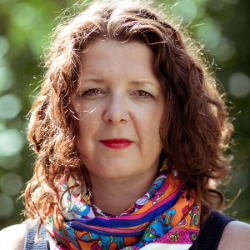
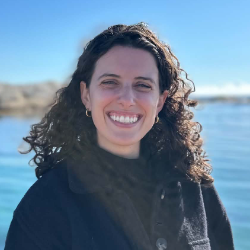
PLENARY 2 - Inspiring action for health equity: Conversations about grounding community voices in practice
Grand Salon OperaSaturday, October 17 8:45 AM - 10:15 AM
Presenting AuthorModerator
This panel will explore how health equity can move from theory into practice by centering the voices, knowledge, and leadership of those most impacted by health inequities. Bringing together practitioners and advocates with experience working alongside underserved communities, the panel will highlight locally and regionally driven approaches that aim to strengthen health services and other global health initiatives through community participation, accountability, and equitable collaborations. Through concrete examples, the panel will leave audience members with practical insights into how equity can be meaningfully embedded throughout the design, implementation, and evaluation of global health initiatives with diverse underserved populations, in Canada and abroad.
Background:
The Subtheme deals with Equity in action and encompases Health systems, resilient systems and communities, and centring marginalized voices. The panel will explore how health equity can move from theory into practice by centering the voices, knowledge, and leadership of those most impacted by health inequities. Bringing together practitioners and advocates with experience working alongside underserved communities, the panel will highlight locally and regionally driven approaches that aim to strengthen health services and other global health initiatives through community participation, accountability, and equitable collaborations. Through concrete examples, the panel will leave audience members with practical insights into how equity can be meaningfully embedded throughout the design, implementation, and evaluation of global health initiatives with diverse underserved populations, in Canada and abroad.
Learning objectives:
By the end of this session, participants will be able to:
- Identify barriers and solutions to integrating contextually grounded approaches into health services and other initiatives to improve health equity;
- Explore concrete approaches for amplifying the voices of underserved communities in fragile or conflict-affected settings in the development of health services and other initiatives;
- Contextualize the strategies discussed during the panel to apply them to the diverse settings where they work.
Methodology / Session format:
The panel will take the form of a bilingual fireside chat, in a circular format to equalize relationships between moderators, panelists, and participants. The panel will be conducted in two parts. In the first part (65 minutes), two moderators will guide discussions with panelists about their experiences and perspectives, guided by a series of questions. In the second part (20-25 minutes), participants will be invited to join the discussion with the panelists to reflect on ways to apply lessons learned in their own context.


-
ORAL SESSION 11: Advancing Sexual and Reproductive Justice
Symphonie 1Saturday, October 17 10:30 AM - 12:00 PM
Presenting Author
"Can a gender-transformative intervention shift adolescent boys' masculine and SRH norms? Lessons from a pilot initiative in Zimbabwe
Maxwell Changombe, Mellisa Fungai Madembo, Sharon Manenji, Nyasha Dangarembizi
La parole aux jeunes : obstacles à une sexualité sans risque qui procure du plaisir chez les jeunes du Bénin, du Burkina Faso et d'Haïti.
Nathaniel Allaire Sévigny, Marie-Josée Lewis
Uplifting Traditional Menstruation & Coming of Age Practices: Sexual and Reproductive Justice for IW2SIQGD
Cherysh Perry, Chelsey Perry, Brittany Bingham
Strengthening Menstrual Health Policy in Lebanon: Lived Experiences, System Gaps, and Evidence for Action.
Andrew Aoun, Angel Foster
Centering Adolescents and Frontline Providers' Perspectives to Strengthen Equitable SRHR Service Delivery Through Human Centered Design in Mozambique
Janani Vijayaraghavan, Andrea Lacorazza, Raissa Umutoni, Célio Monteiro José, Noelle Rancourt, Nina Yengo
When Men Lead the Change: Engaging Male Advocates to Shift Family Planning Norms in Northern Nigeria
Michael Alagbile, Emeka Okafor, Delafrida Ukaga
Equity in Action: Mapping the Invisible Architecture of Intersectional Barriers to Sexual Health Education for Marginalized Youth in the Kallyanpur Slum, Dhaka
Jean Fritz Jacques, Muriel Mac-Seing, Bachera Aktar
"Never on a real patient the first time" - using the Competency Based Approach to transform reproductive health and family planning training in rural West Africa
Anne Vinluan, Ellen Seh, Jeanne Tessougue, Moise Moussa Gabriel, Gabrielle Clémentine Deguenonvo, Hamidou Cisse, Lucy Mphuru
Building Gender-Segregated School Latrines Through Community-Led Development and Human-Centered Design in Rural Ethiopia
Kidist Meseret Mekuria
-
ORAL SESSION 12: Frontline Providers and Equitable Maternal and Newborn Health
Symphonie 2Saturday, October 17 10:30 AM - 12:00 PM
Presenting Author
Leveraging Private Sector Providers to Advance Equitable Access to Family Planning and Primary Health Care in Nigeria: Lessons from the IntegratE Project
Sani Ochepo, Emmanuel Odiniya, Delafrida ukaga
Motivators of Community Health Workers in Enhancing the Quality of Maternal, Newborn, and Child Health Care Services in Rorya District, Tanzania: Insights from the IMCHA Program Supporting CHW Retention and Performance in Low-Income Settings
Bwire Chirangi, Miek Cuijpers, Anja Krumeich
Village midwives as essential frontline providers: sustaining reproductive health care in Insecure regions of Burkina Faso (2022-2024)
Satouro SOME, Maïmouna SANOU, Küssome SOMDA, Hervé KPODA, Moussa DADJOARI, Mamadou OUATTARA, Bertrand MEDA, Lionel OUEDRAOGO, Sibiri SAWADOGO, Seydou BARRO, Firmin KABORE, Djeneba SANON/OUEDRAOGO , Clotaire HIEN, Ali SIE
Whose quality counts? Centring women's voices in the measurement of quality of maternal and newborn care in Burkina Faso
Sarah Cooper, Frank Bicaba, Alice Bila, Federica Fregonese, Marie-Catherine Gagnon-Dufresne, Thomas Druetz
Beyond the Last Mile: Community Midwives as System Connectors in Pakistan's Stable and Crisis Health Settings
Mariyam Sarfraz, Maida Umer, Aashifa Yaqoob, Irfan Ahmed
Structural violence and obstetric fistula in Togo: An exploration of place-based risk trajectories
Maya Low, Erensu Baysak, Danielle Groleau, Jacques Corcos
A Systematic Review of Barriers and Facilitators to Delivery, Uptake, and Utilization of RMNCAH Services in Conflict Settings
Donya Razavi, Areej Amjad, Dina Idriss-Wheeler, Julia Hajjar, Akalewold Gebremeskel, Rajalakshmi Ravikumar, Mekdes Assefa, Christina Angelakis, Faiza Rab, Ilja Ormel, Salim Sohani
From Task-Shifting to System-Building: Reframing Community Health Worker Roles in MNCH Delivery Across Urban Low-Income Settings in Africa and Asia
Victor Igharo, Aaliya Habib, Adewale Adefila
Birth companionship in routine Ethiopian hospital care: partner and female relative presence associated with evidence-aligned intrapartum practices in a pre-post observational study
Tenagnework Dilnessa Mulualem, Helena Lindgren, Johanna Blomgren, Kerstin Erlandsson, Solomon Hailemeskel, Michael B. Wells
-
ORAL SESSION 13: HIV, Sexual Health and Inclusive Health Systems
Symphonie 3Saturday, October 17 10:30 AM - 12:00 PM
Presenting Author
Expériences psychosociales et l'accès aux soins de santé sexuelle et reproductive des jeunes minorités sexuelles et de genre en République du Congo
Gheerbrant Alban MBAMA BOUESSET, Page Berlin IHOU MAKITA
Plurality and Partnership for Equity in Person-Centered Sexual and Reproductive Health Care in Lebanon's Primary Health Care System
Tamar Kabakian-Khasholian, Lara Abi Jaoude, Ghada Saad, Stephen McCall, Faysal El Kak, Dalia El Shaar, Sohayla El Fakahany
Implementation Outcomes and Preliminary Effectiveness of a Peer-Led HIV Self-Testing Model for Adolescent Girls and Young Women in Rural Northern Uganda.
Ronald Olum, Morrish Okello, Freddy Kitutu, Elvin Geng, Philippa Musoke
Exploring the health and social service needs of HIV-positive young mothers in Sub-Saharan Africa: A scoping review
Rose Mary Tazinya, Lisa Bonhomme, Angel Foster
HIV and SRH Needs of HIV-Positive Young Mothers in Cameroon: A Comparative Analysis of Routine and Survey Data
Rose Mary Tazinya, Angel Foster
Filling the Gaps in the HIV Care Continuum: NGOs, Structural Barriers, and Lessons from Venezuelan Migrant Gay and Bisexual Men Living with HIV in Colombia
Julien Brisson, Mariangela Castro-Arteaga, Yeferson Vélez Agudelo, Aarón Zea, Amaya Perez Brumer
Stigmatisation des personnes vivant avec le VIH au CHU Yalgado Ouédraogo : enjeux pour l'équité en santé et la qualité des soins
Abdoul Ismaël Zongo
From Innovation to Implementation: Qualitative Realities of Adopting the UNICEF HIV Pediatric Breakthrough Partnership Framework among Healthcare Providers and Users in Africa
Brenda Okech, Patience Kukundakwe, Gertrude Nanyonjo, Geoffrey Basalirwa, Ronald Mulebeke, Susan Nakubulwa, Barbara Mukasa, Chinye Osa-Afiana, Nadia A. Sam-Agudu, Herminio Cossa
Clinic change and viral load suppression among persons living with HIV in seven sub-Saharan African countries
Ronald Olum
-
ORAL SESSION 14: Epidemics, Antimicrobial Resistance and Community Trust
Symphonie 4Saturday, October 17 10:30 AM - 12:00 PM
Presenting Author
DiseaseTalk: Development and evaluation of a large language model-based chatbot for infectious disease community awareness in low-resource community settings
Gelan Ayana Zewdie, Gelane Biru, Jude Kong
Transforming TB platforms into integrated lung health entry points: improving equity and efficiency in community-based care in Pakistan
Kinz Ul Eman, Usman Rasool
Antibiotic dispensing practices and determinants among informal healthcare providers in low and middle-income countries: a mixed-methods scoping review
Poshan Thapa, Anupama Bhusal, Meera Tandan, Buna Bhandari, Sumanth Gandra, Diwash Timalsina, Swostika Thapaliya, Shweta Bohora, Genevieve Gore, Charity Oga-Omenka, Md Asadullah , Prachi Shukla, Chandrashekhar Joshi, Surbhi Sheokand, Mili Dutta, Samira Abbasgholizadeh Rahimi Rahimi, Madhukar Pai, Giorgia Sulis
Evaluation of Neglected Tropical Diseases Surveillance System in Gadarif State , Sudan
Mohamed Talib, Mohamed Talib, Mohamed Talib, Mohamed Talib
Bringing untold voices to the forefront: The Knowledge and Experiences of Parents Facing Dengue in Dhaka, Bangladesh
Claudia Robayo Gonzalez, Muriel Mac-Seing, Khadija Tull Khushbu, Jasim Uddim, Malay Kanti Mridha, Bouchra Nasri, Kate Zinszer
Building Trust in Epidemics: Community Leadership, Multilingual Communication, and Social Inequalities in the Democratic Republic of Congo
Stéphanie Maltais, Oum El Hanae El Kraid, Serge Obed Kapanga Kule, Delphin Mubanga, Henri Kimina, Justin Masumu
Community mobilization against dengue in Dhaka, Bangladesh: Insights from the design and initial implementation of participatory interventions in a cluster randomized controlled trial
Laura Pierce, Marie-Catherine Gagnon-Dufresne, Claudia Robayo, Mollah Mohd. Shamsul Kabir, Sakib Rahman, Jony Barnard Mackfield, Md. Fahad Zamil, Mohammad Shafiul Alam, Malay Kanti Mridha, Valéry Ridde, Kate Zinszer
Facility-level equity gaps in Mpox awareness and vaccine acceptability among clients in routine HIV services in FCT, Nigeria
Charity Sanni, Kazeem Ayodeji, Stella Ijioma, Charitiana Arome, Ibidabo Alabere
Maximizing Tuberculosis Case Detection Efficiency: A Comparative Analysis of Screening Yield and Resource Optimization Across Community and Private Sector Platforms in Nigeria's GC7 Implementation (2025)
Joshua Odoma. G, Dr. Aderonke Agbaje, Dr. Olayemi Olupitan, Lucia Okwuonye, Fati-Murtala Ibrahim, Chioma Ofoegbu, Pillatar Benjamin, Hasiya Bello, Dr Charles Mensah, Dr Patrick Dakum
-
ORAL SESSION 15: Communities at the Centre: Trust, Engagement and the Foundations of Resilient Health
Grand Salon Opera CSaturday, October 17 10:30 AM - 12:00 PM
Presenting Author
Beyond the Clinic Walls: Community Engagement as Foundational Health System Infrastructure for Equitable Polio Outbreak Response in Rural Nigeria
Aliyu Yakubu, Umar Nisser, Zaiyad Garba Habib, Musa Abba Mohammed, Aminu Surajo, Muhammad Hamza Maishanu
Trusted Community Engagement for Child Health Resilience in Awdal, Somalia: A Convergent Mixed-Methods Study
Samia Mohamed Badar
Integrating Community-Based Surveillance with Behavioral Risk Assessment During Early COVID-19 Transmission: Evidence from Rural Ethiopia
Gemechu Gudina Bulcha, Elias A. Yesuf, Gemechu Sh. Bejiga, Kemeredin Shifa, Bekele Desse
Limitations in Timely Control of Mpox: Voices from Survivors, Caregivers, and Health Care Workers in Uganda, 2025
Harriet Rachel Kagoya, Suudhi Bamutya, Ivan Mungungeyo , Ivan Opar, Ian Tuhumwire, Hamuza Kavuma, Prize Tayebwa, Henry Musembi, Josephine Okwera, Esther Amulen, Harriet Rachel Kagoya
Examining equity, equality and empowerment WASH-outcomes in healthcare facilities: Insights from Liberia, Pakistan and Zambia
Sara Marshall, Tsitsi Fungurani, Jess MacArthur, Christopher Marsh, Nelly Munge, Priya Nath, Saima Sadaf, Mulemwa Sharon Simushi
A mixed-methods evaluation of a community-based crisis helpline to support mental health in Ghana
Marilyn N. Ahun, Selen Calgin, Daniel Atim, Justice Opoku, Richard Appiah, Evans Danso
Friendly Calls as Equity in Action: A Community Centered Model Strengthening Connection and Resilience
Asha Croggon, Renjini Devaki
Evidence-Based Interventions to Support the Integration of Immunisation Within Health Systems and Across Sectors: A Scoping Review
Joelle Ducharme, Audrey Beaulieu, Amy Reid, Étienne Langlois, Andrea Tricco, Mira Johri
Beyond Books: Community Libraries as Youth Power Infrastructure
Josephine Lavoy Ajambo, Dr. Ben Kibirige, Isabella Amony










-
CAGH 2026 Annual General Meeting
Grand Salon Opera CSaturday, October 17 12:00 PM - 1:30 PM
All CAGH members are encouraged to attend. Learn about CAGH activities and priorities, join the discussion, and vote on important matters before the membership.
-
Networking Lunch
Grand Salon OperaSaturday, October 17 12:00 PM - 1:30 PM
Successes, Setbacks and Ask Me Anything (AMA)
Get real about the career journey. Share your successes, challenges, setbacks, and lessons learned in an open, informal conversation guided by optional prompts. Come ready to share, listen, ask questions, and learn from one another.
-
Poster Viewing / Exhibits
SopranoSaturday, October 17 12:00 PM - 1:30 PM
Connect with exhibitors, explore the Day 2 (Sub-theme 2) poster presentations, and engage with fellow delegates to explore ideas and approaches that strengthen health systems, build resilient communities, and center marginalized voices.
-
Centering Communities in Crisis: A Rapid Response Simulation on Climate & Health
Symphonie 4Saturday, October 17 1:30 PM - 3:00 PM
Step into a fast-moving, climate-driven zoonotic outbreak in this 90-minute Rapid Response Simulation. Working in teams, participants will develop and pitch a response to an unfolding scenario, with the winning team recognized at the closing ceremony.
-
SYMPOSIA 3: From Training to Practice: Health Worker Perspectives on Improving Quality of Sexual and Reproductive Health Care in Ghana, Lebanon, and the Occupied Palestinian Territory
Grand Salon Opera CSaturday, October 17 1:30 PM - 3:00 PM
Presenting Author
Background :
Insufficiently staffed and under-resourced health systems and stigma contribute to the large unmet need for quality sexual and reproductive health (SRH) services globally. Health professionals are often expected to deliver high-quality care despite limited training opportunities and limited resources. Evidence shows that strengthening technical competencies and provider attitudes toward respectful, inclusive care can significantly improve service quality and health outcomes. Through Oxfam-Québec's “Power to Choose program”, health professionals were supported to refresh their technical skills, expand their scope of practice and to adopt more inclusive attitudes. This session will share the impact of investing in on-the-job training and mentorship for health professionals, ultimately enhancing quality of care.
Main messages include:
- Key success factors for improving service quality and health outcomes include hands-on, competency-based training, sustained mentorship, safe space to address sensitive topics and strong local ownership.
- Interdisciplinary training strengthens teamwork and emergency response. Aligning training initiatives with national systems and priorities enhances sustainability and impact.
- Overall, this session demonstrates how investing in health workforce capacity contributes to improved health outcomes, even in fragile and low resources settings.
Learning Objectives:
By the end of this session, participants will be able to:
- Learn how training and mentoring models for health professionals can improve the quality of SRH services, drawing on experiences from Ghana, Lebanon and Palestine;
- Identify key design and implementation elements that support sustained improvements in knowledge, attitudes, and practices.
Methodology / Session Format:
This 90-minute session will be conducted through a series of speaker presentations (45 minutes), a moderated panel discussion (20 minutes) followed by an audience engagement and interactive reflection (20-25 minutes), where participants will discuss how to adapt these experiences to their contexts.
-
SYMPOSIA 4: Community-Based Surveillance as a Community-Led Public Health Intervention: Evaluating Appropriateness to Strengthen Local Health Systems in a Fragmented Global Landscape
Symphonie 1Saturday, October 17 1:30 PM - 3:00 PM
Presenting Author
Background
Community-Based Surveillance (CBS) enables the systematic detection and reporting of public health events by trained community volunteers in real time. By extending traditional surveillance to the community level, CBS empowers local actors to identify health threats early and trigger rapid responses. Within the International Red Cross and Red Crescent Movement (RCM), CBS has been adopted as a core component of the Community Epidemic and Pandemic Preparedness Programme (CP3). This approach is designed to complement, not replace, formal national surveillance systems by filling critical detection gaps at the community level, particularly in fragile, resource-constrained, and crisis-affected settings where traditional indicator-based surveillance may not reach. Questions about when and where CBS is most appropriate have become urgent in the face of global humanitarian funding cuts. Decision-makers urgently need evaluative evidence to prioritize interventions that offer the greatest added value in specific contexts. This symposium presents a convergent parallel mixed-methods evaluation conducted through the Canadian Field Epidemiology Program (Public Health Agency of Canada / Canadian Red Cross) that assessed CBS appropriateness across implementation contexts. To ground the evaluation findings in practice, the symposium features a case study illustrating CBS implementation in a specific operational context.
Learning objectives
By the end of this session, participants will be able to:
- Describe the CBS model and how it complements traditional public health surveillance in resource-constrained and crisis-affected settings;
- Critically appraise how the evaluation attributes of acceptability, timeliness, and usefulness can be applied to assess community-led surveillance interventions;
- Identify the implementation contexts in which CBS is perceived as most effective, as well as contexts where it may not warrant prioritization, based on evaluation findings;
- Discuss strategies for sustaining community-led health interventions amid humanitarian funding fragmentation.
Methodology / Session Format
This 90-minute session will combine short presentations facilitating discussions by a panel, while the case study, as a real-world example, will serve as a focal point for panel discussion, allowing participants to critically examine the translation of evaluation evidence into operational decision-making for 20-25 minutes.
-
SYMPOSIA 5: Context‑Driven Leadership for Sexual and Reproductive Health and Rights (SRHR) Implementation Research: The case of the ANeSA Initiative
Symphonie 2Saturday, October 17 1:30 PM - 3:00 PM
Presenting Author
Background
Global health research has been characterized by power imbalances, with the "Global North" setting agendas that may not fully reflect priorities of communities in the "Global South". This dynamic is particularly problematic in SRHR research and implementation where local contexts and voices are crucial. In a period of geopolitical uncertainty and renewed calls for decolonization, there is an urgent need to move from aspirational commitments to equitable, action-oriented approaches. This session aims to facilitate peer-learning and reflection on how co-created, context-driven SRHR research and implementation models can strengthen equity and health systems. The Addressing Neglected Areas of Sexual and Reproductive Health and Rights in Sub-Saharan Africa (ANeSA) Initiative, co-funded by the International Development Research Centre, the Canadian Institutes for Health Research and Global Affairs Canada, will be presented as a practical model. ANeSA emphasizes equitable partnerships between researchers from Sub-Saharan Africa and Canada, alongside local civil society and decision-makers, to advance the realization of critical SRHR issues related to:
- Family planning/contraception;
- Abortion and post-abortion care;
- Adolescents;
- Sexual and gender-based violence;
- Advocacy for underserved populations.
Learning objectives
By the end of this session, participants will be able to:
- Reflect on agenda-setting, power and funding in SRHR research and implementation.
- Visualize how ANeSA shifts co-creation and implementation leadership to local actors.
- Identify practical strategies for nurturing equitable, trust-based partnerships.
- Discuss ways to translate learnings into policy, practice, and scalable interventions.
Methodology / Session Format
This 90-minute session will be articulated through speaker presentations and interactive discussion between panelists followed by engagement and interactive reflection with the audience (20-25 minutes).
-
SYMPOSIA 6: Equity in Action through Co‑Production: Lessons from the Women RISE Initiative on Centering Marginalized Voices for Resilient Health Systems
Symphonie 3Saturday, October 17 1:30 PM - 3:00 PM
Presenting Author
Background
Longstanding structural inequities in health and economic systems have disproportionately affected women in low- and middle-income countries, particularly those engaged in informal, precarious, or stigmatized forms of work. COVID-19 further intensified these inequities and risks to women's health and well-being, underscoring a critical reality: women's health and well-being are foundational to the resilience of families, communities, and population-level health outcomes, especially during crises.
Women RISE is a CAD 24M research partnership funded by the International Development Research Centre (IDRC), the Canadian Institutes of Health Research (CIHR) and the Social Sciences and Humanities Research Council (SSHRC). This session will highlight key evaluation findings of Women RISE projects, including institutionalized health service models, inclusive municipal ordinances, and strengthened community and policy leadership capacities. This panel session will discuss how Women RISE research projects applied knowledge co-production methodologies and a gender-transformative lens to generate impactful outcomes. Panelists will share how engagement with sex workers, caregivers, community health care workers, and self-employed women enhanced trust, improved data validity, and expanded access to populations often excluded from research and policy processes. Panelists will address research co-production challenges and explore safeguarding mechanisms to mitigate potential unintended harms.
Learning objectives
By the end of this session, participants will be able to:
- Share Women RISE outcomes, demonstrating how co-produced, gender-transformative research addresses structural inequities and strengthens women's health and livelihoods;
- Discuss practical approaches to research co-production with marginalized populations and decisionmakers across the research cycle;
- Reflect on challenges and safeguarding in research co-production, identifying strategies to address power imbalances and mitigate unintended harms.
Methodology/session format
The session will feature Women RISE researchers, decision makers and a member of the initiative's evaluation team culminating with a guided panel discussion, followed by a Q&A session with the audience for 20-25 minutes.
Note: This panel pairs directly with WORKSHOP 3 (Sunday, Oct 18, 10:15 AM in Symphonie 3), where participants will gain hands-on practice evaluating these real-world projects using the RQ+ 4 Co-Pro interactive tool.










-
POSTER VIEWING / EXHIBITS / NETWORKING BREAK
SopranoSaturday, October 17 3:00 PM - 3:30 PM
Presenting Author
Connect with exhibitors, explore the Day 2 (Sub-theme 2) poster presentations, and engage with fellow delegates to explore ideas and approaches that strengthen health systems, build resilient communities, and center marginalized voices.
Lived Experiences of Internally Displaced Persons (IDPs) in NorthCentral Nigeria: A Phenomenological Study within an Ecological Systems Framework
Bala Harri, Andem Effiong Etim Duke, Omolayo Anjorin, Damilola Onietan, Somtoo Rita Henry, Chisom Obi-Jeff, Linda liebenberg, Rita Orji, Vincent Agyapong, Ejemai Eboreime
Unmet Mental Health Needs Among Cyclone-Displaced Women in Coastal Bangladesh
Dr. Afsana Shammi, Dr. Afsana Shammi, Md Shahnur Ahmed
A decade after gender-neutral HPV vaccination: A nationwide survey of men's knowledge, attitudes, and practices in Canada
Naharin Sultana Anni, Lawrence Mbuagbaw, Elizabeth Alvarez, Zain Chagla
Disrupted Systems, Reconstructed Trust: A Youth-Led SRHR Model in Armed Conflict Settings of Cameroon
Wacha Roosevelt Wacha
Network-Informed Intervention Design: Social Network Correlates of Adolescent Substance Use in a Ghanaian Senior High School
Ali Dramani, Nurudeen Ali, Abdul Cadri
Improving and rethinking active tuberculosis care through patient experience: insights from a qualitative study in Outaouais (Quebec), among migrants diagnosed with active tuberculosis.
Marie Merline Maurice, Nathan Yanwou, Emina Kubat, Maïa Feki, Fédousha Staya Clervil, Alexandra-Teodora Sofinet, Christelle Aicha Kom Mogto, Marie Merline Maurice
Tuberculosis in the Aftermath of Earthquakes: Case Studies from Japan and Haiti
Hanna Lum-Gerry
Social and Structural Influences on HIV Service Engagement Among Adolescents and Young People Living with HIV in Uganda: A Qualitative Study
Annet Nambeela, Leah Namono, Winnie Namukambi, Gorretti Katushabe
Are we reaching global goals for tuberculosis? A retrospective study of diagnostic tests used and tuberculosis outcomes in Aracaju, Brazil
Aissam Souidi, Victor Santana Santos, Jonathon R. Campbell
Decolonizing mental health care for Black African immigrant youth in Canada: An intersectional and social determinants analysis
Kamsiyochukwu Okpalugo, Azza Eissa MD, PhD
Person-Centred Care in Self-Managed Abortion Services in Cameroon: Experiences, Gaps, and Implications for Community Support
Baloli Victorine Namolongo, NGUAFAC Peter TEMATE Fongeh, Baloli Victorine Namolongo, NGUAFAC Peter TEMATE Fongeh
Stigmatisation et discrimination en milieu de soins : Expériences des personnes vivant avec le VIH à travers l'étude Index Stigma 2.0 réalisée au Sénégal
Saliou Mbacke Gueye, Mouhamadou Moustapha Dioum
Profile intersectionnel des jeunes en situation de handicap face à l'accès aux services de santé et droits sexuels et reproductifs : une étude qualitative à Gulu
Jacob Imani Burume, Jacob Imani Burume, Muriel Mac-Seing
Co-creating adolescent SRHR solutions: Human-centered design to strengthen youth agency and equitable access to services in Uganda
Mabel Sengendo Nabaggala, Martha Nambuyaga Kavuma
Assessing the effect of the nurturing care intervention provided by expert mothers on maternal depression and parenting confidence among mothers with infants born small and/or sick at 6 months of age in 3 rural Rwandan districts
Yvette NKURUNZIZA
Designing a context-adapted Severe Acute Malnutrition intervention guideline for a community-based organisation in Western Kenya: a case study in operationalising national protocols under supply constraints
Caroline Raymond, Jared Oremo, Caroline Raymond
"Bringing the Culture and Connections Back to Life": Food Adaptation, Land Access, and Community Among African Canadian Immigrants in Waterloo-Wellington Regions
Rhoda Omache, Rhoda Omache, Hannah Neufeld
Leadership communautaire et équité en santé : vers des systèmes résilients centrés sur les voix marginalisées
Guy Martial Mendo ZE, ARMEL NYADJO
Justice de genre et inclusion des minorités sexuelles : leadership des jeunes et renforcement des systèmes de santé communautaires pour une équité réelle en santé sexuelle et reproductive : cas du Cameroun
MANDUNH MBOHOU Awawou, MANDUNH MBOHOU Awawou , MANDUNH MBOHOU Awawou
Crossing Borders Alone: A Scoping Review of the Literature on Unaccompanied Migrant Children in Conflict Settings
Sarah Black, Eva Purkey, Emma Patterson, Khaing Zar Lwin, Nway Nway Oo, Chalitar Chomchoei, Katemanee Moonpanane, Colleen Davison
From reactive outbreak response to resilient and community-informed One Health governance: field-based lessons from six provinces in the Democratic Republic of the Congo
Justin MASUMU, Soledad Colombe, Stéphanie Maltais, Jean Jacques Muyembe-Tamfum
Barriers and Facilitators Impacting Access to Sexual and Reproductive Health Services for Women with Intellectual Disability
HIWOT ANDUALEM, Beata Batorowicz, Susan Bartels, Tewodros Seyoum, Bilen Araya, Heather Aldersey
Suivi dirigé par la communauté intégrée (VIH, TB, paludisme) : un levier pour des systèmes de santé plus résilient et redevables au Sénégal
Abdoulaye Dia, Abdoulaye Dia
De la communication des risques à l'engagement communautaire : lever les barrières socioculturelles dans la prévention des maladies émergentes par l'approche Une Santé en République Démocratique du Congo
Florence Ngolole Nzemba , Justin Masumu , Stéphanie Maltais , Roli Paku, Florence Ngolole , Chris Lutonda, Sheila Makiala , Eldad Damuna, Pierre Mutantu, Serge Kapanga, Delphin Mubanga
Determinants of Breast Cancer Screening Among Reproductive-Age Women in Lesotho: Insights from the 2023-2024 Demographic and Health Survey Using Andersen's Behavioral Model
Mesfin Abebe
COVID-19 Vaccine Hesitancy, Self-Reported Adverse Events, and Determinants Among Ethiopian Healthcare Professionals During COVID-19 Pandemic
Alfoalem Abiye, Sisay Endale, Zenebe Negash, Shemsu Umer Hussen, Dawit Teshome Gebregeorgise, Melaku Tileku Tamiru, Dessale Abate Beyene, Hana Shafi Amde, Amanuel Yishak Negash, Hana Amde
Identifying Barriers and Strategies for Improving Pre-exposure Prophylaxis Disclosure: Experiences of Ugandan Adolescent Girls Engaged in Transactional Sex - A Qualitative Study
Simon Mwima, Stephen Walwo, Leah Namono, Winnie Namukambi
Challenging Dominant Discourses of Care: Centering Untold Narratives of Black and Racialized Disabled Women Caregivers of Children with Communication Differences
Deja Forde-Dixon, Deja Forde-Dixon
Pharmacy Regulatory and Health Organizations' Perspectives on the Feasibility of and Barriers to Antimicrobial Stewardship Interventions in Nigeria: A Qualitative Study
Carita Ehinomen Oko-Oboh, Ekenedilichukwu Elvis Ezekobe, Amom Tor-Anyiin , Blessing Uche, Nnakelu Eriobu, Aderonke Agbaje, Giorgia Sulis, Charity Oga-Omenka
Strengthening Community Health Systems and Child Protection officer in the Asal Region of Baringo, Kenya
Bridgit Tarus, Griffin Kangiro , Bridgit Tarus, John Kipruto
Renforcer l'égalité de genre et le leadership des jeunes en santé reproductive enseignements du projet « Ado Avance Ensemble » (2022-2025)
Guy Martial Mendo ZE
Challenges faced by midwives for service utilization in rural areas of a lower middle income country of Pakistan
Bakhtawar Khowaja, Bakhtawar M.Hanif Khowaja
Cartographie et estimation de la taille des populations clés au Sénégal : rôle du leadership communautaire pour améliorer la réponse au VIH
Saliou Mbacke Gueye, Abdoulaye DIA
How Insecurity Shapes Access to Maternal and Child Healthcare in the Sahel: Experiences of Mothers and Health Workers
Théa Demmers, Mohamed Ali Ag Ahmed, Kadidiatou Kadio, Matthew Mitchell, Federica Fregonese, Alice Bila, Frank Bicaba, Abel Bicaba, Abdoul Moumouni Nouhou, Thomas Druetz
"It's not easy, but I'm happy I have my children": A qualitative exploration of the lived experiences of HIV-positive young mothers in Cameroon
Rose Mary Tazinya, Angel Foster
Barriers and Facilitators of Accessing HIV Prevention Services among Street-connected Youths in Amhara Region, Ethiopia: A Socio-ecological Qualitative Study
Amare Workie Gashu, Abebaw Gebeyehu Worku, Achenef Asmamaw Muche, Eshetu Haileselassie Engeda, Tadesse Awoke Ayele
Kidney function decline among sugarcane workers in Peru: occupational differences over one year
Janina Bazalar-Palacios, Maria Palacios, Antonio Bernabé-Ortiz, Tim Driscoll, Brenda Pillaca, Juan Carlos Bazo-Alvarez
Human papillomavirus vaccination status and associated factors among adolescent girls in Durame town, Central Ethiopia, 2026: A Mixed cross-sectional study
Shukulo Melese Gabure, Shukulo Melese Gabure, Addisu Girma
HPV Vaccine Equity Among Adolescent Girls in Abuja, Nigeria: Knowledge Gaps, Systemic Barriers, and Pathways to Action
Samuel Nwaokomah, Samuel Nwaokomah
Integrated Strategies Addressing Predisposing, Enabling, and Illness-Level Factors Influencing Healthcare-Seeking Behavior Among Pregnant Women and Newborn Mothers in Sierra Leone
Ntambara Steven
Maternal Early Warning System (MEWS) Model for Predicting and Reducing Severe Maternal Outcomes in Ethiopia
Mesfin Tadese, Saba Desta Tessema, Dr. Solomon Hailemeskel, Chaltu Takele, Dr. Getaneh Dejen, Dr. Lidya Asalefew Mekonnen, Prof. Getnet Mitikie Kassie
Bridging the Gap Between Access and Quality: A Case for Equitable Specialized Healthcare Delivery in Nigeria
Abdulgafar Abdulrasheed, Abdulgafar Abdulrasheed
A Participatory Adaptation Process of the United Nations Children's Fund (UNICEF) Life Skills Education (LSE) Curriculum for Internally Displaced Persons in Nigeria
Bala Harri, Andem Effiong Etim Duke, Omolayo Anjorin, Chisom Obi-Jeff, Linda liebenberg, Rita Orji, Vincent Agyapong, Ejemai Eboreime, Damilola Onietan, Somtoo Rita Henry
Voices Unheard: Exploring Adolescents' SRH Knowledge, Education, and Service Barriers in Rural Sindh, Pakistan
Salima Meherali, Zahid Ali Memon, Zohra Lassi, Hina Najmi
Repositioning Women as Frontline Providers: Understanding Gender Barriers in Private Sector Family Planning Service Delivery in Northern Nigeria
Delafrida Ukaga, Emeka Okafor, Michael Alagbile
Co-designing equitable digital sexual health supports with youth and parents in Alberta
Neelam Punjani, Amber Hussain, Neelam Punjani, Amber Hussain, Shannon Scott, Margot Jackson, Oluwabukola Salami, Kristopher Wells
Advancing Respectful Maternity Care through Midwife-Led Quality Improvement in Fragile Settings
Kariane St-Denis
Advancing One Health Governance for Equitable Health Security in West Africa: Lessons from ECOWAS RCSDC
Victor Fatimehin, Babacar Fall, Mamadou Diarrassouba, Franck Ale
Les défis systémiques liés à l'approvisionnement et à la distribution des médicaments dans les zones touchées par le conflit au Mali : une étude qualitative
Mohamed Ali Ag Ahmed, Issa Coulibaly, Hassane Alami, Karina Kielmann, Raffaella Ravinetto
Quand l'insécurité rencontre les inégalités : une analyse intersectionnelle des besoins non satisfaits en planification familiale au Burkina Faso.
Cheick Oumar Tiendrebeogo, Federica Fregonese, Thomas Druetz
Reaching zero-dose children in pastoralist Ethiopia through community-led immunization
Hilina Tewedaj Siyoum
Prenatal Care Access Among Uninsured Pregnant Migrant Women in Québec, Canada: A Qualitative Study
Laila Mahmoudi, Catherine Jarvis, Marine Vasina, Juliette Begouen Demeaux, Éric Tchouaket , Lara Gautier
Intégration des services de planification familiale du post partum (PFPP), santé maternelle, néonatale et infantile (SMNI) et nutrition pour l'élimination des décès maternels, néonatals et infantiles évitables dans les pays de l'Afrique de l'Ouest francophone d'ici 2030 : Défis et perspectives
Dénis BOGNINI, Ellen Seh, Pima TIBA, Marguérite NDOUR, Idrissa DERRA, Windlassida Nadina GHILAT PARE/BELEM, Ida Adéline Adjara SALOU/KAGONE
Enhancing Disability-Inclusive Climate Action: Vulnerabilities, Policy Gaps, and Pathways for Equitable Health Systems Resilience in Nigeria
Ikenna Ebiri-Okoro, Ikenna Ebiri-Okoro, David Anyaele
Perceptions of maternity care providers and determinants of companion presence during childbirth in public health facilities of Southwest Ethiopia
Bikila Jiregna, Getu Amsalu, Bikila Jiregna, Wubshet Gizmu
Strengthening the Early Infant HIV Diagnosis Cascade Through Real Time Community to Facility Linkage: Evidence From Eswatini (Oct 2025-Mar 2026)
Themba matsebula Matsebula
Assessing Infrastructure and Workforce for Surgical Care Delivery in District and Level 2 Teaching Hospitals of Rwanda: A Nationwide Facility-Based Survey
Alexander Habtemariam, Marie Merci Cyuzuzo, Sarah Derichs , Alice Umutoni, Anteneh Gadisa, Victor Mithi, Mulugeta Tenna, Emmanuel Nkusi, Pierrette Ngutete Mukundwa, Barnabas Alayande , Abebe Bekele, Sabin Nsazimana, Nobhojit Roy, Georges Bucyibaruta
Delivering Equity in Action: Mobile Medical Units as Adolescent-Responsive, Resilient Primary Healthcare Platforms in Underserved India
Dr Rashmi Ardey nee Soneja
Beyond Access: Rebuilding Community Trust in Primary Care Through Public-Private Partnership in Haiti
Racha Yehia
Assessing perceptions of warming, cooling, and air quality spaces within the broader network of community supports in the Waterloo Region: A qualitative study
Hateem Noor, Sabeen Abbas, Warren Dodd, Hateem Noor
Exploring Community Outlooks of Suicide Risk Screening in Kahnawà:ke: Towards a Culturally Adapted Approach
Lara Humes Doucet, Josée Lavallée , Tamara Hansen, Franco Carnevale , Robin Guyer
Challenges and Assumptions in Estimating Prevalence of Female Genital Mutilation/Cutting (FGM/C) among Women and Girls in Migrant-Host Countries: Insights from International Surveys and Extrapolation Methods
Bilkis Vissandjee, Romy Labranche, Margaret Haworth-Brockman, Wangari Tharao, Rose Ndjel
Autonomy Without Justice? The Limits of Translating Health Policy into Equitable Impact in LMIC Health Systems - Lessons Learned from Pakistan
Nudrat Rasool, Nudrat Rasool, Tariq Babar

















-
ORAL SESSION 16: Community-Driven Approaches to Cancer, Chronic Disease Climate-Related Health Inequities
Symphonie 1Saturday, October 17 3:30 PM - 5:00 PM
Presenting Author
The role of traditional medicine in providing palliative care and improving the quality of life: A survey on patients' knowledge and utilization in Kumasi Metropolis, Ghana
Kofi Barimah, Helena Oteng Nyamekye, Joseph Antwi Barimah
Reclaiming Community Trust for Early Cancer Detection: A People Driven SBCC Model from Project S.H.I.E.L.D. in Lagos, Nigeria
Offiong Moore, Anne Adah-Ogoh, Tinuola Akinbolagbe, Muyiwa Olowoporoku
Optimizing National Pediatric Cancer Awareness Strategies to Improve Timely Diagnosis and Treatment Completion in Uganda
Julia Apolot, Dream Tuitt-Barnes, Jason Rudahusa, Angel Qiu, Annie Wu, Alisha Varty-Higgs, Hadi Alhasani, Julie Martinovic, Parita Talati, Sabrina Robertson, Makayla Duff, Denize D'Souza, Anushka Kalia, Salem Cherif, Rinusha Piranthapan, Olivia Walker, Munmeet Paur, Fatima Mohammed, Megan Lerulli
Inequities in Breast Cancer Screening Utilization: A Qualitative Study of Multilevel Barriers and Facilitators in South Ethiopia
Charuai Suwanbamrung, Eskinder Israel Tona
Meso-level evidence to targeted interventions: Stokvel-level heterogeneity in food insecurity, obesity, and NCD burden across Cape Town townships in South Africa
OLUFUNKE ADUKE ALABA, Vicki Lambert, Zulfah Albertyn-Blanchard
Mapping Child and Youth Engagement in Climate Change Governance: A Scoping Review of Access, Agency, and Wellbeing
Chelsea Williams Cleary, Danielle Denwood, Kate Tilleczek, Kathi Zangerl, Kerry Scott
From Climate Exposure to Climate Exclusion: Equity Gaps Shaping Youth Centred Public Health Resilience in Vulnerable Communities
Jane Chinyere Adizue, Sulayman Abdullahi, Jennifer Anyanti
Prevalence of poor health related quality of life, associated factors, and the impact of lived experiences among patients with epilepsy at Mulago National Referral Hospital
HUMPHREY ATWIJUKIIRE
Understanding macro-level factors shaping the 'therapeutic itineraries' of individuals with non-communicable disease in the Philippines: A qualitative study
Laura Jane Brubacher, Monica Bustos, Hannah Rayel, Warren Dodd
-
ORAL SESSION 17: Conflict, Displacement and the Health Workforce
Symphonie 2Saturday, October 17 3:30 PM - 5:00 PM
Presenting Author
Understanding Health Healthcare Workers' Turnover Intentions in War-Torn Tigray, Ethiopia: A Mixed Methods Study
Mengistu Hagazi Tequare
''We Don't Have a Pipeline Problem" - Why Global Health Must Stop Recruiting Its Way Out of a Workforce Equity Crisis
Viksit Bali
Does the duration between incidence and reporting have a relationship with consent to further action? Analysis of data from Nigeria
EUGENE BUDU, Miriam Bathnna, Hasiya Bello Raji, Opeyemi Adebayo, Aderonke Agbaje, Patrick Dakum, Abdulhamid Ibrahim, Margaret Zamzu, Ebenezer Kwesi Armah-Ansah, Charity Oga-Omenka
Evolution of the Ethiopian Emergency Medical Team: As a Model for Localized Resilience and Health Equity in Crisis Settings within LMIC countries.
Dr. Nahom Tadelle Dessie, Dr. Mesgana Befekadu Gebreselassie
Facteurs associés à l'utilisation de la contraception moderne chez les femmes migrantes et déplacées internes vivant dans les quartiers informels de Ouagadougou et de Kaya au Burkina Faso
Fiacre BAZIE, Kiswênsida Bénédicte YAOGHO, Yentéma ONADJA, Drissa SIA, Eric Tchouaket, Pengdwendé Maurice SAWADOGO
Development and validation of a reproductive coercion and abuse scale for refugee women in humanitarian settings
Nuruzzaman Khan, Karen Block
Mpox Clade 1b Emergence in South Kivu, DRC: Three Years of Field Experience
Jean Claude Udahemuka, Pacifique Ndishimye, Leandre Murhula Masirika, Audace Mukiza, Trudie Lang, Justin BENGEHYA, Marion Koopmans
Meanings and Practices of Solidarity in and for Humanitarian Healthcare Workers who have operated in Prolonged Conflict Settings
Francisco Mendina, Elysee Nouvet, Gail Teachman, Maxwell Smith
Reproductive, Maternal, Neonatal and Child Health Service Coverage Sub-Index in Ethiopia's War-torn Tigray: Findings from a Community-based Survey
Mengistu Hagazi Tequare
-
ORAL SESSION 18: Digital Equity, Innovation and the Architecture of Access
Symphonie 3Saturday, October 17 3:30 PM - 5:00 PM
Presenting Author
A National Assessment of Digital Inequities in Medical Education in Nigeria: Implications for Health Workforce Equity and Global Competitiveness
Paul Kingpriest, Joshua Okpanachi
Denominational Doctrine and Health Seeking Behaviour in Abuja, Nigeria: A Comparative Mixed Methods Study
Stella Atema Ijioma, Kazeem Ayodeji, Charity Sanni, Agatha Nwachkwu, Abimbola Nwoko, Afolabi Sunbo, Samuel Orok, Alabere Ibidabo, Maduka Ijioma, Hasiya Bello, Evaezi Okpokoro
Health Access, Insurance Gaps, and Informal Care Use Across Christian Denominations in Abuja, Nigeria
Stella Atema Ijioma, Evaezi Okpokoro, Charity Sanni, Kazeem Ayodeji, Agatha Nwachkwu, Abimbola Nwoko, Afolabi Sunbo, Alabere Ibidabo, Maduka Ijioma, Miriam Bathnna, Opeyemi Adebayo, Olayemi Oolupitan, Temitope Eyitayo Adetiba, Aderonke Agbaje Vivan, Patrick Dakum, Janet Kineu
From paper records to digital resilience: Lessons from Rwanda's e-Tracker for equitable immunization systems
Francine Uwamahoro, Andrew Muhire, Piero Mazimpaka Irakiza, Emmanuel Christian Nyabyenda, Hassan Sibomana, Jeanine Condo
Minimizing ED Mis-triaging Using Explainable Machine Learning
Berihun Tsega Alemayehu, Abel Digafe Ketema, Gebrie Mekonen Haile
Settlement Classification and Health Service Variation in Post-Restructuring Nepal
Sushanti Chapagain Bucktowar, Stephen Hodgins, Sandeep Agrawal
A Relational Approach to Global Health Rights: Reconciling Vulnerability and Geopolitical Realism
Afiyah Islam
Strengthening Regional Biobank Capacity for Equitable Public Health Action in West Africa: Baseline Assessment of the Institut Pasteur Côte d'Ivoire Biobank Toward ISO 20387 Accreditation
Kayode Akanbi, Chinelo Ebruke, Babacar Fall, Mamadou Diarrassouba, Kayode Akanbi, Babacar Fall, Chinelo Ebruke, Mamadou Diarrassouba
Uncovering Spatial Inequality: Food Insecurity, Community Belonging, Health, and Food Bank Use Across Canadian Aggregated Dissemination Areas (ADAs)
Khoaja Khaled, Richard Matern
-
ORAL SESSION 19: Immigrant, Indigenous, and Marginalized Communities Leading Health Equity
Symphonie 4Saturday, October 17 3:30 PM - 5:00 PM
Presenting Author
Islamophobia in Canadian Nursing: Lived Experiences and Implications for Health System Equity
Zahra upal, Jennifer Jackson, Zahra upal
What Can Canada's Health System Learn About Black Maternal Health from TCI's Decade of Scaling High-Impact RMNCH Interventions in Africa and Asia? A Cross-Context Policy Perspective for Canada's Growing Black, Immigrant, and Person of Colour Population
Victor Igharo, Kojo Lokko, Victor Igharo
Strengthening community resilience by centering Indigenous epistemologies to inform cultural adaptation of the Mental Health Gap Action Programme (mhGap) in rural KwaZulu-Natal, South Africa: a community-engaged forum theatre-based study
Nomusa Mngoma, Amrita Roy, Sphesihle Radebe, Oyedeji Ayonrinde
Mapping HIV care linkage pathways and barriers for racialized newcomers already living with HIV in Ontario
Shuying Chen
Evidence-Informed Curriculum Design for Newcomer & Refugee Youth Mental Health in Child and Adolescent Psychiatry Training
Zara Hasan, Nikhita Singhal, Zara Hasan, Lauren Hishon, Philippe Hwang, Lekhini Bhatt, Jennifer dela Paz, Catherine Deschênes, Marijana Jovanovic, Athena Ko, Chetana Kulkarni, Arfeen Malick, Raj Rasasingham, Albina Veltman
A scoping review of postpartum mental health concerns of racialized mothers in Canada
Saima Hirani, Savitha Balachandran, Rubee Dev, Rishika Selvakumar, Kayoung Lee, Sara Sunderji, Teerka Baskaran, Michelle Carter, Annette Browne, Savitha Balachandran
Multi-Level Promotion of Mental Health Resilience of Black Families and Communities
Joseph Adu, Joseph Adu, Josephine P. H Wong, Priscilla Boakye, Egbe B Etowa, Sebastian Gyamfi, Mark Owusu
Investing in Matriarchal Power, Access, Care, and Traditional Wellness (IMPACT): Menopause Priorities Among Indigenous Women
Brittany Bingham, Chelsey Perry, Danielle Harkey, Piper Scott-Fiddler, Lydia Feng, Lori Brotto
Co-design of an evaluation of cultural safety in residential services for Inuit with reduced autonomy in Nunavik
Natalia Reinoso Chávez, Jeannie May, Iván Sarmiento, Minnie Grey, Chantal Duchesne, Barbara Helen Wellman, William Bilodeau, Richard Budgell, Anne Crockcroft, Neil Andersson
-
ORAL SESSION 20: Sexual and Reproductive Health Justice Across the Life Course
Grand Salon Opera CSaturday, October 17 3:30 PM - 5:00 PM
Presenting Author
Early Marriage and Adolescent Pregnancy: A Qualitative Participatory Study of Sexual and Reproductive Health Rights in Rural Sindh, Pakistan
Salima Meherali
Reducing Contraceptive Stigma to Advance Adolescent Health Equity in Tanzania: Findings from a Participatory Community-Based Pilot
Rachel Di Iorio, Rachel Di Iorio, Nicola West, Anisia Kiwelu, Doreen Mruma, Elizabeth Ngolle, Mwasiti Jumanne, Isabell Kearn, Carmen Logie, Karen Yeates
Utz K'aslemal in Action: Centering Indigenous Leadership to Advance Equity in Sexual and Reproductive Health Systems in Quetzaltenango Guatemala
Gladis Perez, Norma Itzep
Renforcer la résilience, l'équité et la sensibilité au genre des systèmes de santé en santé sexuelle et reproductive : approche d'un projet multipays en Colombie, Guatemala et Haïti : projet « Ma santé, mes droits / Sante mwen, dwa mwen / Mi salud, mis derechos »
Marie DOREY, Islene LAZO, André-Paul VÉNOR
Maternal Life Course Mapping - Using a Visual, Participatory Method to Define Maternal Health with Low-Caste and Tribal Women in India
Patricha Jeppe Ottsen, Andrea Mellor, Cecilia Benoit, Zahra Premji
Équité en action à Montréal : améliorer l'accès aux soins des personnes im/migrantes non admissibles à la RAMQ par une approche de santé publique ancrée dans la parole citoyenne, l'intersectorialité et la mobilisation des décideurs
Lavanya Narasiah, Danielle Kouhio Depri
"What option do I have?" A case study about how women with physical disability experience access to perinatal care in rural Ethopia
Dawit Mekonen
Fragmented Paths to Universal Health Coverage: Enrollment Gaps and Inequities in State-Supported Health Insurance Schemes in Nigeria
Fortune Effiong, Roseline Dine, Ibrahim Hassan, Dimeji Olawuyi, Idongesit Isong, David Adewole














-
Centering Youth Voices in Sexual and Reproductive Health and Rights A Co-Learning Session about Navigating Power, Participation, and Practice
Symphonie 4Saturday, October 17 5:15 PM - 6:45 PM
Presenting Author
We will present the short films produced through The Together Project 2.0 and lead an interactive, co-learning discussion. The goal of this youth-led project was to co-create two inclusive youth sexual and reproductive health and rights (SRHR) education video series with and for youth living in situations of vulnerability who were underrepresented in ASRHR education programs. We mobilized youth as co-researchers, engaging with youth living in an urban slum (in Kallyanpur, Bangladesh) and living with disabilities (in Gulu, Uganda).
While youth-led methodologies and meaningful youth engagement have enormous transformative potential in global health, it remains difficult to translate knowledge into action with tangible results. By presenting The Together Project 2.0, including our methods, challenges and outcomes, the main objective is to co-learn with session participants about youth-led approaches in global health, exploring questions such as: How can we translate knowledge into action while engaging youth meaningfully, in complex global health contexts? How can we foster equitable power distribution between youth and researchers, and between international partners? How can we center youth's voices while navigating the tensions between international objectives and local benefits?
The session is organized in four sections: - Presentation of The Together Project 2.0: objectives, background (Uganda and Bangladesh), methods, key challenges and lessons learned (10 minutes) - Presentation the ASRHR education video series produced by youth in both countries, answering questions from the audience (30 minutes) - Interactive discussion with the goal of co-learning and identifying concrete ways to foster youth-led approaches in global health ecosystems (40 minutes) - Future perspectives (10 minutes)
We will present two examples of youth-led SRHR education video series to encourage participants to mobilize youth-led methodologies. Participants will engage in a co-learning process to foster youth-led approaches in SRHR, while considering real-life challenges in global health. The goal is to bridge the gap between theory of meaningful youth engagement and global health practices and address difficult questions around participation. Overall, this session will provide new insights to support innovative, participatory methodologies sensitive to age, disability, gender and local context, for global health researchers and professionals engaging with youth. -
Noma through the eyes of survivors - Addressing the imperative of the most neglected communities
Symphonie 1Saturday, October 17 5:15 PM - 6:45 PM
Presenting Author
For many years, health systems have faced major challenges on a global scale. Some diseases receive significant attention from health policymakers, whilst others remain largely neglected, to the detriment of the rights of certain populations. Noma is a striking example. Recognised in 2023 by the WHO as a neglected tropical disease, it is a gangrenous infection of the mouth caused by extreme poverty, malnutrition and poor hygiene, resulting in the death of up to 90% of those affected. It mainly affects children aged between 2 and 6, yet it is preventable and treatable at an early stage.
● Learn about noma (risk factors, progression, diagnosis, screening, management) ● Understand the realities experienced by survivors (stigmatisation, psychological and economic impact) ● Recognising the importance of person-centred and community-centred approaches ● Identifying practical ways to integrate neglected tropical diseases into existing health programmes ● Exploring ways to strengthen the inclusion of people with lived experience at the heart of health programmes
The workshop will take a two-part participatory approach. The first phase will consist of a screening of the documentary 'Restoring Dignity' (52 minutes), which follows several noma survivors in north-western Nigeria over the course of a year. The film highlights the survivors' journeys by showing their reality, their challenges and their resilience in the face of stigma and difficulties in accessing care. In the second part of the event, a group discussion will be held to share knowledge, identify key lessons and highlight actionable steps to advance the fight against noma. This discussion will include Mulikat Okanlawon, a noma survivor and president of Elysium, the first survivors' association. The discussion will focus on people with lived experience and communities, health equity, the fight against discrimination and community resilience.
● Personal accounts are essential for understanding hidden challenges and tailoring interventions to the needs of communities. ● Involving those directly affected helps to strengthen local and regional health systems and prevention programs. ● People with lived experience must be recognised as key stakeholders in health response in order to achieve greater equity. -
The Years Between: A Participatory Mapping Tool to Identify Hidden Gaps in Care Pathways.
Symphonie 3Saturday, October 17 5:15 PM - 6:45 PM
Presenting Author
Diagnostic delay (DD) is a systems-level marker of health inequity that disproportionately affects women's health, yet it is rarely measured or redesigned. Polycystic Ovary Syndrome (PCOS) offers a revealing case; a common, chronic condition affecting fertility and long-term health, often misdiagnosed, underdiagnosed, or recognised only after years of delay. Contributing factors include fragmented care pathways, limited clinical awareness, gender bias, stigma, and racialised inequities in access to culturally responsive care. During delays, patients continue to suffer from symptoms, experience disruptions to daily life and relationships and lose trust in health systems. This workshop introduces Diagnostic Journey Mapping (DJM), a participatory visual tool for identifying where and why care pathways break down. Designed for clinicians, patients, researchers, and community organisations, DJM makes hidden barriers visible, integrates lived-experience insights with systems thinking, and positions all stakeholders as co-producers of change. Using PCOS as an illustrative case, participants will explore how diagnostic delay reveals broader inequities across conditions and settings.
Participants will: 1. Examine how diagnostic delays are produced at the healthcare systems level. 2. Apply the DJM tool to a care pathway relevant to their practice, research, or policy. 3. Identify opportunities for intervention across clinical, research, and community settings. 4. Translate lived-experience insights into actionable implementation strategies.
This 90-minute session combines brief framing with facilitated group work. Participants will apply the DJM tool in small groups to map stages in a care pathway, including symptom recognition, care-seeking, referrals, delays, and system barriers. Guided discussion will support participants in identifying patterns, fragmentation points, and opportunities to improve equity, trust, and continuity of care. The session concludes with a collaborative synthesis in which participants generate transferable recommendations for integrating DJM into research, service design, and health systems strengthening.
Diagnostic delay is a measurable, addressable, and too often overlooked signal of inequity within health systems. Early diagnosis can reduce disease burden, improve care pathways, and strengthen trust. DJM offers a transferable tool to identify intervention points and inform responsive care design. Advancing global health equity requires expanding what counts as evidence and recognising community knowledge as part of building resilient systems.


-
CCGH 2026 After Hours
Il Teatro Restaurant ItalienSaturday, October 17 6:45 PM - 9:00 PM
Join us for CCGH 2026 After Hours!
Wrap up the second day of the conference with fellow attendees over good food and easy conversation. Our official After Hours meetup is an optional, pay-your-own-way evening of relaxed networking and a taste of Montréal hospitality. No sign-up is needed.
Il Teatro Restaurant Italien (Italian) - 1250 Rue Jeanne-Mance. It is right next to the DoubleTree by Hilton and a quick walk from the venue.
Come hungry, come curious, and we'll see you there!
-
Networking Breakfast
Grand Salon OperaSunday, October 18 7:30 AM - 8:15 AM
Start your day with a light breakfast and the opportunity to connect with fellow delegates, partners, and exhibitors.
-
PLENARY 3 - Aligning funding, evidence, and strategies to galvanize global health action
Grand Salon OperaSunday, October 18 8:30 AM - 10:00 AM
Presenting AuthorModerator
Subtheme 3 deals with practical approaches and tools for implementation and accountability, emphasising how to translate knowledge to action and evidence to impact or in other words, how to bridge research to practice at all levels. Our goal is to showcase successful examples where evidence has informed or inspired action in diverse, real-world contexts. We aim to highlight the practical tools and frameworks that were used, emphasising accountability to communities. Change requires alignment between those in the community, those generating evidence, those implementing solutions, and those providing resources and funding. By bringing together a diverse group (experts, practitioners, funders), we hope to bridge the gap between knowledge and the public, turning research into action that builds trust and inspiring wider support for global health equity. This session will offer different perspectives for a better and a comprehensive vision.
Background:
Subtheme 3 deals with practical approaches and tools for implementation and accountability, emphasising how to translate knowledge to action and evidence to impact or in other words, how to bridge research to practice at all levels. Our goal is to showcase successful examples where evidence has informed or inspired action in diverse, real-world contexts. We aim to highlight the practical tools and frameworks that were used, emphasising accountability to communities. Change requires alignment between those in the community, those generating evidence, those implementing solutions, and those providing resources and funding. By bringing together a diverse group (experts, practitioners, funders), we hope to bridge the gap between knowledge and the public, turning research into action that builds trust and inspiring wider support for global health equity. This session will offer different perspectives for a better and a comprehensive vision by:
- Analysing the landscape of global health funding within a dynamic and shifting environment;
- Formulating strategies to effectively mobilize agencies and multi-sector partnerships;
- Integrating the voices and perspectives of diverse stakeholders to support local ownership and navigation without compromising community agency;
- Harnessing the power of the collective to actively improve the state of global health equity;
- Discussing real-world stories/examples where evidence has successfully turned insight into actions at local, regional, and global scales.
Learning Objectives:
By the end of this session, participants will be able to:
- Apply practical frameworks and approaches that successfully move evidence into action within diverse, real-world community contexts;
- Engage in cross-sector discussion and discourse to bridge the gap between research, the public, and global health equity;
- Establish accountability structures that actively prioritize community trust and local impact over standard report filing;
- Synthesize insights from the session into a meeting report or perspective piece to drive lasting alignment between experts, practitioners, and funders.
Methodology / Session Format:
This 90-minute plenary session will include a moderated expert panel with audience engagement through a Q&A period involving all participants for 20-25 minutes.


-
Building Skills for a Career in Global Health
Symphonie 4Sunday, October 18 10:15 AM - 11:45 AM
This interactive session will begin with a panel discussion on the skills needed to build a career in global health, drawing on panelists working across fields such as global health research, health equity, global health governance and policy, knowledge translation, human rights, and health advocacy.Panelists will share how they developed and applied key skills throughout their careers and offer practical insights for students and young professionals interested in global health.The panel discussion will be followed by an interactive CV workshop, where participants will learn how to strengthen their CVs and effectively highlight their experiences and transferable skills for opportunities in global health. -
SYMPOSIA 7: Reclaiming Pandemic Preparedness in Africa: Multi-Method Lessons on Health System Readiness, Governance, and Equity
Grand Salon Opera CSunday, October 18 10:15 AM - 11:45 AM
Presenting Author
Background:
Pandemic preparedness in Africa should be understood not only through the lens of constraints,but also through the strengths, innovations, and adaptive capacities that emerged duringCOVID-19. Multi-method evidence shows that governance, coordination, implementationcapacity, and institutional learning are central to effective vaccine delivery under pressure.Cross-country learning can help identify practical strategies for strengthening readiness andresilience before the next crisis. Advancing global health equity requires sustained investmentin system readiness, accountability, and locally grounded leadership.
Pandemic preparedness in Africa is entering an important new phase, shaped by lessons fromCOVID-19 and growing momentum around stronger, more equitable health systems. COVID-19revealed variation in vaccine access and uptake, as well as creativity, leadership, and adaptivecapacity among countries and institutions. This symposium will present findings from theStrengthening Pandemic Vaccine Preparedness in Africa (SPAVPA) program, which usessystematic review, cross-country regression modelling, and qualitative research to examinereadiness, coordination, implementation, and resilience. The session will highlight commonchallenges and promising strategies for strengthening future pandemic preparedness.
Learning objectives:
By the end of this session, participants will be able to:
- Examine how pandemic vaccine preparedness in Africa is shaped by governance,institutional readiness, implementation capacity, and adaptive learning;
- Compare insights from systematic review, cross-country regression modelling, andqualitative systems research;
- Identify promising strategies and practical lessons for strengthening equitable andresilient preparedness systems;
- Translate multi-method evidence into actionable priorities for policy, implementation,and accountability.
Methodology / Session Format:
This 90-minute session will begin with sequential presentations and will conclude with anintegrated discussion between panellists and audience members on lessons for implementation,accountability, and equitable preparedness (20-25 minutes).
-
SYMPOSIA 8: Digital Health in a Fragmented World: From Data Silos to Equitable Systems (TB as a Case Study)
Symphonie 1Sunday, October 18 10:15 AM - 11:45 AM
Presenting Author
Background:
Digital health systems are expanding rapidly across disease programs and public health functions, yet fragmentation, weak interoperability, and governance gaps continue to limit their impact on health equity and system performance. In tuberculosis (TB), digital tools span the care cascade—from care-seeking and screening to diagnosis and treatment—but often operate in silos across public, private, and community providers. These challenges mirror those seen in Canada and globally during COVID-19, where limitations in data sharing and system integration constrained real-time decision-making. In a fragmented and uncertain global health landscape, digital systems must move beyond technical solutions to address governance, trust, and equity. Reclaiming global health equity requires interoperable, people-centred digital systems that integrate data across providers and settings.
Using TB as a case study, this symposium will examine how interoperable digital systems can strengthen public health surveillance, support equitable service delivery, and enable data-driven decision-making across contexts, including relevance for Canada's evolving public health surveillance and digital health governance systems. Lessons from TB programs highlight the importance of aligning technical design with governance, trust, and equity considerations. This symposium will generate practical recommendations for strengthening digital health systems, including in Canada, by advancing interoperability, improving surveillance integration, and supporting equitable, data-driven decision-making in a fragmented global context.
Learning objectives:
By the end of this session, participants will be able to:
- Examine how fragmented digital systems affect equity and system performance;
- Analyse interoperability and governance challenges across global and Canadian contexts;
- Explore how digital systems can strengthen public health surveillance and decision-making;
- Identify practical policy and implementation priorities for integrated, people-centred systems.
Methodology/session format:
This 90-minute symposium will use a structured, case-informed policy dialogue format. The session will include short presentations followed by a 20-25 minute moderated discussion and audience engagement to identify actionable strategies for integrating digital systems across providers and levels of care.
-
SYMPOSIA 9: Leveraging CRVS Systems to Advance Women's Health, Gender Equality, and Accountability
Symphonie 2Sunday, October 18 10:15 AM - 11:45 AM
Presenting Author
Background:
Civil Registration and Vital Statistics (CRVS) systems are fundamental to advancing women's health, gender equality, and evidence-based decision-making. However, a persistent gap between data generation and policy action often limits their transformative potential. Led by UNFPA in partnership with IDRC, this session explores how countries are bridging this divide by translating CRVS data into scalable, high-impact interventions through integrated system strengthening, innovative tools, and sustained policy engagement.
Drawing on implementation experiences across Africa, Asia, Latin America, Eastern Europe, and the Arab States, the session demonstrates how strategic investments in CRVS, including legal reforms, national strategies, sustainable financing, and digital integration, drive measurable improvements in service delivery and accountability. Using case studies from Pakistan, Georgia, Uruguay, Kenya, Rwanda, Ghana, and Jordan, the session presents evidence on how CRVS insights inform critical policy decisions, catalyse transformative change and illustrate successful North-South, South-South, and North-North learning pathways and contextual adaptations. Examples include leveraging maternal mortality data to guide health investments, utilizing birth registration to expand service access, and applying marriage and divorce data to safeguard women's rights.
The session also introduces actionable tools developed through the UNFPA-IDRC collaboration and the Centre of Excellence for CRVS Systems, including guidelines, policy briefs, analytical frameworks, and training manuals, including the use of multimedia storytelling, such as videos and digital exhibits.
Learning objectives:
By the end of this session, participants will be able to:
- Illustrate how CRVS evidence could be translated into advocacy and policy influence at both national and global levels;
- Mobilize tools for transitioning pilot projects to institutionalized and sustainable CRVS systems;
- Manage concrete strategies to harness CRVS systems as engines for improved women’s outcomes, gender equality, and inclusive development.
Methodology / Session Format:
*Lightening presentations * Panel discussion * Interactive Audience with Q&A and discussion (20-25 minutes).
-
WORKSHOP 3: Putting Co-Production to the Test: A Hands-on Workshop using the RQ+ 4 Co-Pro Framework to Evaluate Gender-Transformative Research in Global Health
Symphonie 3Sunday, October 18 10:15 AM - 11:45 AM
Presenting Author
Building on insights shared in the panel “Equity in Action through Co-Production,” (Symposium 6: Saturday, October 17, 1:30-300 pm), this workshop deepens the conversation on research co-production, defined as the collaborative generation of knowledge between researchers and those who use it, and explores how co-production can be systematically assessed and strengthened. Research co-production is essential to ensuring that research is useful, usable, and used. However, traditional evaluation approaches often struggle to capture critical dimensions of co-production, including partnership quality, power dynamics, and enabling environments. To address this gap, the evaluation of Women RISE deliberately applied the Research Quality Plus for Co-Production (RQ+4 Co Pro) framework to assess how projects generated contextually relevant and effective evidence.
This workshop introduces participants to RQ+ 4 Co Pro as a practical extension of the panel discussion, translating reflective lessons into an applied evaluation lens. RQ+ 4 Co-Pro is a holistic tool grounded in three core tenets: context matters, quality is multi dimensional, and appraisal must be empirical. The session will explore how these principles can be understood, applied, and adapted across diverse settings. Women RISE grantees will contribute perspectives during the session, offering illustrative reflections on both the opportunities and challenges of co-production in practice.
- Apply the three foundational tenets of the RQ+ 4 Co-Pro framework to reflect on real-world global health research across contexts.
- Utilize systematic rubrics to examine multiple dimensions of research quality including legitimacy, power-sharing, and intersectionality.
- Explore the relationship between research process quality and actionability for policy and practice.
The workshop will combine short presentations, guided discussion, and applied reflection to support learning. Participants may engage with illustrative project materials and examples from Women RISE to collectively examine how research quality is assessed using RQ+ 4 Co-Pro. Opportunities for dialogue-potentially including reflections from grantees-will support shared learning and critical exchange, with facilitation adapted to participant engagement and group size.
Evaluation is not just a post-hoc audit but a developmental tool for learning and capacity strengthening. By building on the lessons highlighted in the Women RISE panel and applying tools like RQ+ 4 Co-Pro, participants can advance co-production as a core condition for equitable and actionable impact.



-
Networking Lunch
Grand Salon OperaSunday, October 18 11:45 AM - 12:45 PM
Beyond the Conference: Mentorship & Staying Connected
Build connections that last beyond CCGH2026. Explore mentorship opportunities, share tips for building meaningful mentor–mentee relationships, exchange insights on current professional projects, and discover ways to stay connected through LinkedIn and beyond. Leave with new connections and ideas for keeping the conversation going long after the conference.
-
Poster Viewing / Exhibits
SopranoSunday, October 18 11:45 AM
Recharge while continuing the conversations sparked throughout the sessions. Visit the exhibits, meet with our exhibitors, and explore the Day 3 (Sub-theme 3) poster presentations to discover research, practical tools, and innovative approaches that bridge evidence and practice.
-
ORAL SESSION 21: Retention and Equity Across the HIV Care Continuum
Symphonie 1Sunday, October 18 12:45 PM - 2:00 PM
Presenting Author
Reclaiming Health Equity Through an Integrated Community-Based HIV Care Model: Evidence from Tanzania
Baraka Leonard Mfilinge, Vivian Calvin Kombe
Can Routinely Collected HIV Testing Programme Data Generate Actionable Surveillance for National PrEP Programming in Malawi?
Gashaija Absolomon
You Can't Scale to 95% Without Retention: Rebound, Not Coverage, Limits Viral Suppression After Treat-All in Rural South Africa
Gashaija Absolomon
Higher Mortality in HIV-Hepatitis B Co-infection Despite Antiretroviral Therapy: Evidence to Advance Integrated and Equitable Care from Northern Ethiopia.
Goshu Hagos Gebrewahid, Haileselassie Bisrat Bidre, Desalegn Massa Teklemicael, Gebrecherkos Teame, Fsaha Gebretsadkan Tekulu, Alemayehu Bayray Kahsay
From Science to KahsayExperience: Advancing Health Equity Through the U=U Message Among Serodiscordant Couples
Rose Muema
Enhancing Providers' Cultural Competency for HIV Prevention Services for Black Communities in Canada: Adaptation and Pilot-testing of a Culturally Responsive HIV Pre-Exposure Prophylaxis (CR-PrEP) Intervention
Wale Ajiboye, Hannah Zuta, Debapriya Chakraborty, Jemal Demeke, LaRon Nelson
Implementation Science in PMTCT: Scaling Viral Load-Driven ART Decisions for Pregnant Women in Zimbabwe 2025
UWASE NKUSI DIANA
Delays in the HIV Care Cascade Among Asylum Seekers at the CVIS, in Québec from 2022-2024
Amrita Narasiah Verma, Claire Dufrêne-Boelen, Bertrand Lebouché, Kathy Nodzynski, David Lessard
-
ORAL SESSION 22: Immunization and Newborn Survival Strategies
Symphonie 2Sunday, October 18 12:45 PM - 2:00 PM
Presenting Author
Feasibility of a dual intervention to support childhood vaccination - Findings from a 12-month prospective cohort in Northwest Cameroon
Ziad El-Khatib, Yayah Emerencia Ngah, George Mondinde Ikomey, Fabrice Sewolo, Cornelius Chebo, Shalom Tchokfe Ndoula, Charles Shey Wiysonge, Ujjwal Neogi, Claudia Hanson, Tobias Alfven, Stefan Swartling Peterson, Yousef Khader, Wadih Maalouf, Eresso AgaStakeholder Perspectives on Introducing a Shigella Vaccine into Pakistan's Routine Immunization Program
Naveed Ahmed, Mohammad Tahir, Farah Qamar
Reducing Neonatal Hypothermia Through Quality Improvement in Ghana
Frederick Ayensu, Doris Abapiri, Gift Marcus Agyemang, Christabel Wouters, Victoria Agyeiwaa Sarfo, Nina Aziewoda
Co-designing an Implementation Model for Stillbirth Reduction in Pune, India using Action Priority Matrix and RE-AIM framework
Nisha Mutalikdesai, Kiran Kadam, Eesha Chawan, Sayali Kasture, Dhiraj Agarwal, Sanjay Darade, Abhiraj Suryawanshi, Suhas Kore, Nitin Ambadekar, Reema Mukherjee, Sudipto Roy, Girish Dayma, Mukta Gadgil, Rutuja Patil
MRI in Clinical Practice: Low-Field Detection of Dandy-Walker Syndrome in an Infant Born to an Anaemic Mother in Rural Ghana
LAWRENCE ASARE, Ruby Dzifa Doe, Lawrencia Yamba
Strengthening Global Vaccination Efforts in Fragile Settings: Translating Field Realities into Vaccine Product Design
Tambe Elvis Akem
Bridging the know-do gap through co-design of an open-access knowledge management platform: the Newborn Toolkit
Lauren Allison, Mbozu Sipalo, Tobias Whatley, Zoe Griffiths, David Gathara, Chinyere Ezeaka, Olufunke Bolaji, Msandeni Chiume, Nahya Salim, Karen Walker, Alex Stevenson, Ousmane Ndiaye, Hema Magge, Neena Khadka, Tedbabe Degefie Hailegebriel, Rebecca Richards-Kortum, Maria Oden, Ornella Lincetto, Harriet Ruysen, Olive Cocoman, Anita Gibson, Gagan Gupta, Joy Lawn -
ORAL SESSION 23: AI and Digital Health in Low-Resource Settings
Symphonie 3Sunday, October 18 12:45 PM - 2:00 PM
Presenting Author
Coded Inequity: Why AI in Global Health Will Widen the Gap Before It Closes It
Viksit Bali
MARMAR: Building AI-Powered Medication Safety Infrastructure for Low-Resource Health Systems in Africa
Ahmad Rufai Yusuf
From Design to Delivery: A Scoping Review of Digital Mental Health Interventions for Youth in Low- and Middle-Income Countries
Queenie Cheung, Fabbiha Raidah, Benedict Weobong, Kerry Scott
Bounded by design: why digital mental health interventions are not yet reaching the adolescents who need them most: evidence, equity gaps, and a systems agenda for LMICs
Amina Ibrahim, Timothy Imanobe Oliomogbe
Comparison of verbal autopsy using a large language model to biologically confirmed causes of death for malaria and other communicable diseases among children in six sub‐Saharan African countries
Ronald Carshon - Marsh, Richard Wen, Thomas Kai Sze Ng, Rajeev Kamadod, Isaac Bogoch, Susan J Bondy, Theodore J Witek, Prabhat Jha
Overcoming Digital Colonialism through Local AI Development: Lessons from Computer-Aided Detection of Tuberculosis and Silicosis in Southern Africa's Ex-Miners
Jerry Spiegel, Sean Terespolsky, Annalee Yassi, Richard Klein, Rodney Ehrlich, Warrick Sieve, Joshua Bruton, Hairong Wang, Karen Lockhart
-
ORAL SESSION 24: Digital Platforms and Diagnostics for Equitable Access
Symphonie 4Sunday, October 18 12:45 PM - 2:00 PM
Presenting Author
From Barriers to Bridges: Co-developing and Implementing the DITE mHealth Platform to Improve Healthcare Access for Deaf Communities in Malaysia
Uma Devi M PALANISAMY, Sabrina Anne Jacob, Anthony Alexander VeeYee Chong
Predicting essential medicine stock-outs with routine data and AI in Ethiopia
Kassa Fentaw
Assessing the Implementation of Mazboot Bunyad-a Digital Nutrition Program using RE-AIM framework at Private Provider Clinics in Urban Slums of Karachi, Pakistan - A Multi Method Study
Muhammad Fazal Hussain Qureshi, Nimra Qaiser, Ammarah Ali, Wafa Zehra Jamal, Zahid Ali Memon, Shifa Salman Habib
Digital X-ray Teleradiology for Tuberculosis Screening: Advancing Global Health Equity through the XMAP Platform in Nigeria
Kehinde Jimoh Agbaiyero, Clement Adesigbin, Emperor Ubochioma
Real-World Implementation of Haqila: An AI-Powered Multilingual Platform for Community-based Disease Surveillance in Ethiopia
Gelan Ayana Zewdie, Gelane Biru, Jude Kong
mPallCare: Translating Digital Health Innovation into Equitable Community-Based Palliative Care in Resource-Constrained Settings
DIANA NABUNJE, PATRICK KITENDA NJUKI, MICHEAL NDAWULA, RONALD SSEMIREMBE, MATTHEW ALLSOP
Human-wildlife conflict in Chebera Churchura National Park, Ethiopia: Translating One Health evidence into action for livelihoods, health, and governance
Anteneh Berhane Yeyi, Tadesse Gaudu, Tarekegn Solomon, Ararso Tafese, Kissanet Tesfay, Akeza Awealom Asgedom, Berhanu Abera, Belete Debebe, Melaku Getachew, Agumas Shibabaw, Alfoalem Araba Abiye, Mukarim Abdurahman, Waktole Yadeta, Yordanos Tadesse, Hailu Lemma, Knight-Jones Theodore , Siobhan M. Mor, Seid Tiku Mereta, Mirgissa Kaba
-
ORAL SESSION 25: Foundations Under Pressure: Primary Care, Chronic Disease and Climate-Resilient Health Systems
Grand Salon Opera CSunday, October 18 12:45 PM - 2:00 PM
Presenting Author
Implementation strategies, barriers, and facilitators and outcomes of the WHO-HEARTS technical package for diabetes, hypertension, and cervical cancer prevention and control within primary health care settings globally: A scoping review
Chanyalew Worku Kassahun, Kassahun, Kassahun Alemu Gelaye, Netsanet Worku Mengistu, Amare Demsie Ayele, Tadesse Guadu Delele, Yohaness Ayanaw Habtu
Experiences and Perceptions of a Culturally Tailored Health Promotion Intervention among Adolescents Living with Type 1 Diabetes in Uganda
Jonathan Nsamba, Charles Mwanje, Nicholas Matovu, Safaa Garelnabi, Sheena Arayo, Ronald Tibiita, Karen Ademun, Ruth Biyinzika, Wenceslaus Sseguya
Strengthening Primary Health Care through Primary Care Networks: Baseline Evidence on Access, Quality, and Care Coordination in Machakos Sub-County, Kenya
Anne Ndolo, ANN MWANIKI, Francisca Kivuva, Cosmas Musyoki, ALEX Mwanza
Building a Shock-Resistant Shield: Assessing and Enhancing the Resilience of Zambia's Primary Health Care System to Climate-Induced Health Threats
Mulemwa Sharon Simushi
From Data to Justice: Implementing Community-Led Accountability Tools for Climate-Resilient Health Systems in the Global South
Willard Tatenda Duri
A Systematic Review of Socio-economic Disparities in Occupational Noise Exposure
Maryam Mirzaei Hotkani, Zahra Jafari



-
POSTER VIEWING / EXHIBITS / NETWORKING BREAK
SopranoSunday, October 18 2:00 PM - 2:30 PM
Presenting Author
MOLECULAR DIAGNOSTIC TESTS SPECIFICITIES AND THEIR CONTRIBUTION FOR HAT POSTELIMINATION MONITORING IN BURKINA FASO AND CÔTE D'IVOIRE
Charlie Franck Alfred Compaoré, Minayégninrin Koné, Jacques Kaboré, Vincent Jamonneau, Hamidou Ilboudo, Mohamed Bamba, Hassane Sakandé, Dramane Kaba, Adrien Marie Gaston Belem, Veerle Lejon
From Emergency Response to Structural Reform: Addressing Health Inequities in Canada's Toxic Drug Crisis
FREDRICK AKINYOSOYE, Wuraola Awosan, Tawakalt Bashir
How Urban Health Policy in Bangladesh Systematically Excludes the Dhaka Slum Population
Afsana Shammi
Achieving Global Health Conference Equity: Practical Strategies and Framework
Betel Fenta, Michelle Joseph , Barnabas Alayande, Kiana Winslow, Ayla Gerk, Orit Abrahim, Riya Sawhney, Callum Forbes, Tsion Yohannes
Unlocking Testing: Applying Anderson's Behavioral Model to Understand HIV Test Access Among Young Women
Mesfin Abebe, Mesfin Abebe
Evidence Synthesis for the Development of a Collaborative Health Research Agenda in Kaduna State, Nigeria
Hajara Nakkudu, MPH., Ruth Musa Sunama, Dorcas Asuku, Abolade Oyelere, Kayode Samuel Alabi, Julie Wieland, MPH., Ibrahim Ibrahim, Hussena Hassan Adam, Dr Sunday Joseph
Action-Oriented Education for Global Health Equity: A Mixed-Methods Evaluation of a Brief Educational Intervention on Migration-Related Health for Health Sciences Students.
Dulce Maria Solis Arana, Maria del Pilar Gonzalez Amarante, Cristina Alejandra López Delgado, Carolina Azcuaga González
National HTA system in Canada: from system analysis and understanding to system strengthening
Mohamad Alkhaldi, Aisha AlBasyouni, Sara Ahmed, Malak Alrubaie, line Enjalbert
Seroprevalence and associated risk factors of Rift Valley Fever in humans from three ecological zones of Senegal
Elisabeth Thérèse FAYE, Etienne Simon-Lorière , Malick Fall, Samba Niang Sagne, Mareme Seye Thiam, Noe Ochida, Ousseynou Sene, Sokhna Mayemouna Diop, Ndeye Sakha Bob, Moussa Dia, Moussa Moise Diagne, Oumar Faye , Ndongo Dia, Diawo Diallo, Anavaj Sakuntabhai , Cheikh Talla, Simon Cauchemez, Cheikh Loucoubar, Mamadou Aliou Barry, Gamou Fall
Every Week Counts: Leveraging ART Exposure Duration to Improve Birth Outcomes Among HIV-Positive Pregnancies in Ghana
Wisdom Kudzo Axame, Margaret Kweku, Fred Newton Bibka
Evaluation of an eHealth Training Tool for Assistive Device Provision: A Quasi-Experimental Study
Rachel Sudhakar, Jennifer O'Neil
From siloed laboratories to operational One Health collaboration: a practical implementation model from the Democratic Republic of the Congo
Bibiche Kapinga, Soledad Colombe, Jean Jacques Muyembe-Tamfum, Justin MASUMU
Pre-exposure prophylaxis disengagement and retention trajectories among adolescents and young adults from key and priority populations in Uganda
Bosco Mukubba, Stephen Walwo, Winnie Namukambi
FEASIBILITY AND USER EXPERIENCE OF AMBER, A WEB-BASED TRAUMA REGISTRY, IN NEPAL
Olivia Koufos, Olivia Koufos, Steven Di Marco, Gabriela Sanchez, Dipak Shrestha, Sanu Krishna Shrestha, Rajkumar Dangal, Jeremy Grushka, Dan Decklelbaum , Samjhana Basnet
72-Hour Evidence Bridge: A Pre-Publication Rapid Translation Framework for Research Centers to Prevent Misinformation
Viksit Bali
Analyse éthique du programme de délégation de compétences médicales d'un projet pilote au Bénin.
Ahlem Meroua Benlazaar, Béatrice Godard, Linda François
Au-delà des chiffres : ce que les données sur les ressources humaines en santé révèlent en contexte rural et éloigné au Pérou
Natalia Torres Orozco, Katty Felícita Lagos Reyes, Gabriel Blouin-Genest, Luis Alberto Alanoca Pazos, Sherly Lorena Arellano Oscanoa, Aracely Victoria Villasante Beteta, Julio Cesar Alache Vargas, David-Martin Milot, Alvaro Andrés Torres Bustos
COST-EFFECTIVENESS OF ART TEEN CLUBS IN HIV MANAGEMENT AMONG ADOLESCENTS IN NKHOTAKOTA DISTRICT, MALAWI.
Rehema Simika, Jobiba Chinkhumba
Developing Clinical Prognostic Models to Predict Graft Survival after Renal Transplantation: Comparison of Statistical and Machine Learning Models
Getahun Mulugeta Awoke
A COMPARATIVE END-USER SURVEY TO ASSESS BED NET USE FOLLOWING MASS DISTRIBUTION IN FODOME, GHANA
Oscar Barnabas Kwame Anumu, Oscar Barnabas Kwame Anumu, Oscar Barnabas Kwame Anumu, Oscar Barnabas Kwame Anumu
Antimicrobial Resistance and Zoonotic Transmission of Salmonella and Shigella in Abattoirs: A One Health Study in Buea, Cameroon
TANYI PRIDE BOBGA, TABE ARREY MICHAEL
Automating Annual Operational Planning (AOP) for Kaduna State, Nigeria Health Sector: A Digital Transformation Approach to Strengthen Health System Performance.
Julie Wieland, MPH., Hajara Nakkudu, Kayode Samuel Alabi, Abolade Oyelere, Osighemeh Sedi-Inwutube, Raymond Akan, Samuel Atanda, Dorcas Asuku, Ruth Musa Sunama, Ibrahim Ibrahim, Dr Sunday Joseph
The Impact of Protected Bicycle Lanes on Cyclist Safety in Urban Areas: A Rapid Review
Alfred Kwan
Digital Interventions for Sexual and Reproductive Health Among Young Adults: A Global Systematic Review of Psychosocial and Behavioural Impacts (2017-2023)
Melisa Eraslan, Nitika Pant Pai, Ashlyn Beecroft, Olivia Vaikla, Angela Karellis
The Role of Healthcare System Trust in Maternal Health Disparities in Canada: A Mechanistic Intervention Model
Lylah Khan, Hana Khan, Lylah Khan, Hana Khan
Evaluation of a COVID-19 self-testing digital program in populations with suspected SARS-CoV-2 infection on turnaround time to test results and linkages to care: findings from a randomized controlled trial in South African townships
Nitika Pant Pai, Melisa Eraslan, Aliasgar Esmail, Qihuang Zhang, Jeremi Swanepoel, Apoorva Anand, Mincen Liu, Keertan Dheda
Africa CDC's Role in Containing Rwanda's First Marburg Outbreak: Lessons for Health Security
Gashaija Absolomon
Mapping the Gap - A Continental Assessment of Biobanking Infrastructure Across Sub-Saharan Africa
Sandra Nanyonga
Strengthening Epidemic Intelligence and Early Warning Systems in West Africa: Development and Operationalisation of the EcoAlert Platform
Victor Fatimehin, Damola Olajide, Babacar Fall, Mamadou Diarrassouba, Tome CA, Franck Ale
Why So Late? Prevalence and Correlates of HIV Testing Among MSM in Japan in the Context of Rising AIDS Diagnoses
UWASE NKUSI DIANA
SMS reminders alone do not improve childhood vaccination uptake - Findings from a non-randomized controlled trial in rural Zambia
Adon Chawe, Rex Wong, Ziad El-Khatib
Implementing Urine Xpert MTB/RIF Ultra for Tuberculosis Diagnosis in HIV Clinics in Ibadan, Nigeria: Six-Month Implementation Lessons and Early Diagnostic Yield
Charity Sanni, Kazeem Ayodeji, Veronica Ajuka-Patrick, Stella Ijioma, Joseph Ozigbo, Miriam Bathnna, Felix Agaga Odama, Hasiya Bello, Ejilude Oluwaseun, Temitope Adetiba, Adebayo Opeyemi, Olayemi Olupitan, Aderonke Agbaje, Temitope Ilori, Margaret Zamzu, Evaezi Okpokoro
Scaling What Works Without Breaking What Exists: TCI's Integrated MNCH Model as a Sustainable Financing and Implementation Blueprint in a Shrinking Aid Landscape
Victor Igharo
Projet Ado Avance Ensemble (CAMNAFAW, 2022-2025) Relier la recherche à la pratique en santé sexuelle des jeunes (Afrique francophone)
Guy Martial Mendo ZE
Advancing Equitable Environmental Health Surveillance in West Africa Through the Selection of Regional Reference Laboratories for Toxicological Threats
Kayode Akanbi, Victor Fatimehin, Babacar Fall, Mamadou Diarrahssouba, Kayode Akanbi, Victor Fatimehin, Babacar Fall, Mamadou Diarrassouba, Chinelo Ebruke
From Evidence to Action: Embedding Evaluative Thinking in Global Health Strategy
Katherine Hay, Katherine LaNasa, Lotus McDougal
Assessing the Quality and Credibility of Integrated Supportive Supervision (ISS): Evidence from Independent Verification (IVISS) in Kano State, Nigeria
Afeez Olajire, Rilwan Sholanke, Rashidat Olanrewaju, Umar Alabira, Abdulrahman Ibrahim, Chidera Precious, Aishat Kadir, Toluwanimi Adewole, Victory Ekpin
From Commitment to Action: Why World Health Assembly Priorities Fail to Translate into Health System Impact in LMICs
Runa Khan, Muhammad Asif Khan, Mumtaz Khan, Sartaj Muhammad, Farhan Ahsan
Effect of pulmonary rehabilitation on lung function and quality of life in pulmonary tuberculosis survivors with post-tuberculosis lung disease: a systematic review and meta-analysis
Abraham Gebremedhn, Kidist Bobosha
Disclosure of Chlamydia trachomatis in a Conflict-Affected Setting: Barriers, Determinants, and Implications for Health Equity in Buea, Cameroon
Pride Tanyi Bobga, Njouendou Abdel Jelil, NAHBILA BABILA CHANTAL, Bime Melissa Jane Siben, TABE MICHAEL ARREY, Jane-Francis Tatah Kihla Akoachere, Nahbilah Babila Chantal
Implementation Fidelity and Adaptation in Complex Community-Based Health Interventions
Oluwatobi Mohammed, Reeya Kothari, Diana Sherifali, Lehana Thabane, Deborah DiLiberto
Psychometric Evaluation of Acceptability, Appropriateness, and Feasibility Measures among Internally Displaced Persons in Nigeria: Implications for Implementation Outcome Measurement in Humanitarian Settings
Omolayo Anjorin, Olushina Ayo Junior Ale, Oluwatomiwa Fasoro, Ihoghosa Iyamu, Ngozi Ezeanozie, Adegboyega Sapara, Andem Effiong Etim Duke, Bala I Harri, Damilola Onietan, EJEMAI EBOREIME, Jidda M Said, Rita Orji, Asmau MC Dahiru, Chisom Obi-Jeff, Fatima Baba-Ari, Somtoo Rita Henry, Tunde M Ojo, Umar Baba Musami, Vincent IO Agyapong
From Evidence to Policy: Leveraging Tobacco Control Lessons to Advance Sugar-Sweetened Beverage Taxation in Vietnam
Nguyen An, An Nguyen Thi, Chau Lai Minh, Nguyen Hanh Nguyen
Project Green Healthcare: A National Medical Student Initiative Advancing Sustainable Healthcare in Canada
Aishwarya Rajesh Krishnan, Nicoletta Dini, Keishini Selvaganesh, Susie O'Brien, Farin Mir, Jay Hwang, Kaamraan Islam, Rayan Shafi, Jasmeen Dourka
From Evidence to Action: Embedding Equity and Accountability in Virtual Health Innovation
Olivia Nieves Echevarria, Joanna Marie Rivera, Maria Montenegro, Quynh Ho, Mahado Mohamed Hassan, Rico Misajon, Janice Sorensen, Lillian Hung, Valorie Crooks, Megan MacPherson
Incomplete and Inconsistent Nutrition and Lifestyle Counselling in Diabetes Care: Gaps in Adherence to Standards, Guidelines, and Frameworks
Daniel Matoke Ayienda, Phoebe Wairimu Mwaura, Emily Nabifwo Wasike
Beyond Digital Health: Mapping Explicit AI Integration in National AMR Action Plans Across 10 African Countries
Abdulmumin Ibrahim, Yusuf Olalekan Babatunde
Bridging Knowledge Gaps to Improve Medication Safety in Nigerian Hospitals
Idowu Makinde, Elizabeth Adedire, Kenneth Egwuda, Abdullahi Garba, Charles Ehiemere
From Data to Impact: Using Artificial Intelligence to Drive Equitable Health Outcomes in Underserved Communities
Kelvin Ovabor, Kelvin Ovabor, Adaeze Nweke
Exclusive breastfeeding knowledge, attitudes, and practices among post-natal women in Kwara State, Nigeria: Comparing ANRiN beneficiaries and non-beneficiaries
Osoteku Demilade, Uchenna Igbokwe, Abdulateef Salisu, Muyi Aina, Daniel Abraham, Precious Uahomo, Precious Otono, Pius Salako, Francis Fatoye, Inioluwa Olasehinde, Musibau Elweide, Yetunde Adeseluka-Oladejo, Ebenezer Abimbola, Usman Kolawole, Isioma George, Tobiloba Adaramati, David Otoosakyi, Eric Aigbogun Jr, Kudirat Lambe
From Evidence to Action: Developing Person-Centered SRHR Implementation Strategies for Lebanese Primary Health Care Centers
Tamar Kabakian-Khasholian, Aline Germani, Lara Abi Jaoude, Rouba El Kadi, Michael El Kassis, Faysal El Kak
Climate-Induced Flooding and Gender Inequities in Access to Chronic Disease Care: A Narrative Review
Karen Helmy Ademun, Karen Helmy Ademun, Caroline Aboda, Karen Helmy Ademun, Karen Helmy Ademun
X-Ray, CAD, and Teleradiology: A New Model for Early TB Detection in Nigeria
Kehinde Jimoh Agbaiyero, Adetayo James, Clement Adesigbin, Emperor Ubochioma, Kehinde Jimoh Agbaiyero
TB/HIV Cascade Performance Among PLHIV on ART in Nigeria, 2024-Mar 2026: Screening, TB Yield, Treatment Initiation, and TPT Uptake
Charity Sanni, Stella Ijioma, Joseph Ozigbo, Kazeem Ayodeji, Miriam Bathnna, Veronica Ajuka-Patrick, Chioma Ofoegbu, Temitope Adetiba, Adebayo Opeyemi, Evaezi Okpokoro, Olayemi Olupitan, Aderonke Agbaje, Temitope Ilori, Urioku Ochuko, Patrick Dakum, Margaret Zamzu
Evaluating a Multidisciplinary Project ECHO Program to Improve Perinatal and Neonatal Palliative Care in Low and Middle Income Countries
Smriti Khanna, Bernice Leung, Kiran Shrivastava, Spandana Rayala, Megan Doherty
Effectiveness of Scaling Teleradiology for Tuberculosis Detection in High-Burden Settings: Implementation of the XMAP Platform in Nigeria
Kehinde Jimoh Agbaiyero, Odume Bethrand, Clement Adesigbin, Emperor Ubochioma
Global Knowledge, Local Impact: Leveraging Childhood Cancer Knowledge Mobilization in India to Inform Culturally Responsive Care for Indo-Canadian Families
Janeva Shahi, Chandan Kumar, Ritu Bhalla, Ramandeep Arora, Argerie Tsimicalis
Strengthening Global Pandemic Preparedness: Insights from WHO and the Intergovernmental Negotiating Body
Juliet Shaibu, Bettina Borisch, Juliet Shaibu, Emeka Iloegbu, Marilee Goad
Climate Migration as a Health Equity Imperative: Co‑Creating Adaptation Strategies with Women Impacted by Forced Displacement
Dr. Shahin Kassam
From Access to Impact: Integrating SRHR and HIV Services to Improve Outcomes among Adolescent Girls and Young Women in Nigeria's GC7 Program
Joshua Gowon, Fati-Murtala Ibrahim, Dr Olayemi Olupitan, Dr Aderonke Agbaje, Pillatar Benjamin, Lucia Okwuonye, Dr Charles Mensah, Dr Patrick Dakum
Closing the Detection-Action Gap: Surveillance Without Response in Pakistan's 2022 Flood Crisis
Runa Khan, Muhammad Asif Khan, Sartaj Muhammad, Nadia Nisar, Nudrat Nudrat
Translating Knowledge into Action: A Multi-sectoral Research Partnership Model for Catalysing Health System Responsiveness to Adolescent's SRHR in Ghana.
Rachel Pell, Catherine Liao, Lydia Aziato, Josephine Mukakalisa, Theresa Oppong-Mensah
Persistent circulation of Rift Valley fever virus lineage C in Rwanda, 2022-2025
Pacifique Ndishimye, Audace Mukiza, Evodie Uwibambe, Leandre Murhula Masirika, Fabrice Ndayisenga, Marion Koopmans, Jean Claude Udahemuka
Profiling Technologies Used in Pakistan to Support the Tuberculosis Care Cascade - A Document Review
Saad Ahmed, Charity Oga-Omenka
Humanitarian Service Integration in Fragile and Active Conflict Setting : A proven strategy to enhance immunization and humanitarian service uptake in fragile settings
Foyeth-Kamdem Eugène-Lebrun, Foyeth-Kamdem Eugène-Lebrun, Njume Epie Mesume, Stephane Dufis, Ful Morine, Fri Delphine, Banlack Hilary
Trends in HIV Testing, Case Identification and Associated Factors: Data Insights and Lessons Learnt from Cameroon's Littoral and South Regions, 2019-2024
Ntambara Steven



















-
ORAL SESSION 26: Antimicrobial Resistance and Health Security: From Policy to Practice
Symphonie 1Sunday, October 18 2:30 PM - 3:45 PM
Presenting Author
Reclaiming Safety in Precarious Systems: A Stepwise AMR Strategy for Neonatal Care
Aniroda Broomand, Lindsay Ross, Jasper Wagan
Antibiotic Stewardship in Senegal: A Legal Epidemiological Analysis of the One Health Framework
Mouhamadou Moustapha Sow, A.M Viens
Closing the Blind Spots: How Pakistan Built a National Early Warning System for Multi-Pathogen Threats
Huma Khattak, Asif Khan, Ali Rehman Khan
A Scoping Review on Accountability Mechanisms for Antimicrobial Resistance
Babatunde Odugbemi, Lauren Wallace, Joanne Ong, Lathika Laguwaran, Hefot Ahmed, Mathieu Poirier, Tarra Penney, Mary Wiktorowicz
Bridging Innovation and Equity: Insights from a scoping review mapping AI-enabled surveillance and equity-gaps in global pandemic preparedness frameworks
Dipika Shankar Bhattacharyya, Brent McCready-Branch, Labiqah Iftikhar, Thenugaa Rajeswaran, Jobaida Behtarin, Lakshna Ponrajah, Veronica Guglietti, Christina Mac, Md Akhtarul Islam, Zahid Ahmad Butt
Factors associated with the recurrence of cholera outbreaks in Rumonge Health District in Southern Burundi: An unmatched case-control study
Emile Nkurunziza
Assessment of Antibiotic Prescribing Practices for Surgical Site Infections in a Tertiary Hospital in Liberia: Implications for Antimicrobial Stewardship
Elvis J Davis
-
ORAL SESSION 27: Financing Health Systems for Equity
Symphonie 2Sunday, October 18 2:30 PM - 3:45 PM
Presenting Author
Using Evidence to Drive Equity: The ULERAWA Non-Contributory Health Insurance Model in Ekiti State, Nigeria
Peter Oshaji, Dr. Chike Nwangwu
What interventions support equitable healthcare-related financial protection in LMICs?
Krista Kruja, Sophie Witter, Nouria Bricki, Maria Paola Bertone
Fixing Broken Systems, Not Just Funding Them: A Scalable Public-Private Governance Model Restoring Primary Healthcare Delivery in Pakistan
Muhammad Asif Khan, Runa Khan, Farhan Ahsan
Innovations in Sustainable Health Financing: Lessons from TCI's Catalytic Challenge Fund Model Across 13 Countries - A Blueprint for the Post-Aid Era
Victor Igharo, Ian Salas, Kojo Lokko
Evaluating the Impact of QR Code Payment Systems on Financial Efficiency and Patient Experience in a Private Healthcare Facility in Kenya: A Mixed-Methods Study
Damaris Were, Asad Mian
Du concept à la pratique : opérationnaliser le Value-Based Healthcare par le TDABC dans les trajectoires de soins
Véronique Plouffe, Véronique Nabelsi, Camille Lemay-Brousseau
-
ORAL SESSION 28: Systems-Thinking for Service Delivery and Health Workforce Response
Symphonie 3Sunday, October 18 2:30 PM - 3:45 PM
Presenting Author
Surgical Volume and Referral Patterns in Rwanda's District and Level 2 Teaching Hospitals: A Nationwide Cross-Sectional Analysis
Alexander Habtemariam, Marie Merci Cyuzuzo, Sarah Derichs, Alice Umutoni, Anteneh Gadisa, Mulugeta Tenna, Victor Mithi, Emmanuel Nkusi, Barnabas Alayande, Abebe Bekele, Pierrette Ngutete Mukundwa, Sabin Nsazimana, Georges Bucyibaruta, Nobhojit Roy
Health Workers' Perceptions of Health System Barriers and Facilitators, and the Challenges Faced by Internally Displaced Persons When Managing Febrile Diseases in Kinshasa, Democratic Republic of Congo
Landry Kalembo, Deborah DiLiberto, Mwandagalirwa Kashamuka, Jean Claude Kalenga, Antoinette Tshefu, Lawrence Mbuagbaw, Kristin Banek
Leveraging program learning for practice: Lessons from the implementation of community health programs by Red Cross & Red Crescent Societies in Africa
Jocelyne Labonté, Akalewold Gebremeskel, Ilja Ormel, Bhanu Pratap Maurya, Salim Sohani
Unique and adaptive evolution in LMIC health system response for TB and COVID-19 diagnostic for impoverished travelers
Farzana Zaman
What Sticks and Why: Cross-Disease Implementation Lessons from Concurrent Research Programmes in Pakistan
Mariyam Sarfraz
From participatory mapping to serious games: Experiential learning approaches to develop systems thinking and address equity in Global Health
Olivier Kambere Kavulikirwa, Thomas-Julian Irabor, Nicolas Antoine-Moussiaux
An Implementation, Monitoring and Evaluation Guide for Developing, Attracting, Recruiting and Retaining the Rural and Remote Health Workforce
Youri P. Moleman, Svea Closser, Laurence Codjia, Pascal Zurn, Sheri Morgan, Mohammed Gazali Salifu, Maryam Hameed Khan, Arman Majidulla, Kirthini Muralidharan, Krishna Rao, Ligia Paina
-
ORAL SESSION 29: Adolescents, Schools and Tools for Health Impact
Symphonie 4Sunday, October 18 2:30 PM - 3:45 PM
Presenting Author
A co-designed, implementation-ready training and systems integration toolkit for adolescent-responsive SRH service delivery in primary healthcare in Northern Uganda
Samson Udho, Maxson Kenneth Anyolitho, Judith Akello Abal, Edmonton Acheka, Morris Chris Ongom, Odette Murara, Bernard Omech
Using Vignette Based Tools to Translate Very Young Adolescents' Voices into SRHR Programming in Tanzania
Janani Vijayaraghavan, Dunstan Matungwa, Stella Kilima, Daniela Donia, Esteria Kisoka, Mussa Kabele, Denna Mkwashapi
Du droit à l'accès effectif : outils de redevabilité pour l'avortement sécurisé post-viol chez les adolescentes dans le cadre d'Ado Avance Ensemble
Guy Martial Mendo Ze
Climate Change and Water-Associated Diseases in Ethiopia and South-Africa: Citizen Perspectives, Insights from local leaders and decision-makers on Interventions and Barriers from one-health perspective
Amber Abrams, Abraham Gawo, Yohannes Mulugeta, Dinku Mekbib, Maxine Jonker, Anisha Nijhwan, Guy Howard, Josephine Walker
The impact of school health integration with Eye Health and Deworming in school Age Children and Teachers: A Pilot Project for the control of Soil Transmitted (STH) Helminthiasis and Vision Improvement in endemic counties for STH in Liberia 2021-2025
Deddeh P.G. Bettee, Catherine Kolleh Gargu, Kerkula Bettee, Olivia D. Kokolee
From Interaction to Impact: Using Communication Analysis to Enhance Health Education Outcomes in Moroccan Elementary Schools
Khadija DAOUDI, Abdellah Gantare
Prevalence and Psychosocial Predictors of Modes of Cannabis Use Among U.S. Adolescents: Comparing Vaping and Non-vaping Patterns
Rita Chukwu
-
ORAL SESSION 30: HIV, Sexual and Reproductive Health and Rights
Grand Salon Opera CSunday, October 18 2:30 PM - 3:45 PM
Presenting Author
Evaluation of PrEP Retention and Clinical Outcomes Among 86,575 Clients in Eswatini (2016-2026)
Mbuso Siwela
Maternal ART Timing and Perinatal Outcomes in the Contemporary Treat-All Era: A Systematic Review and Meta-Analysis
Chisom Chukwuma, Lereen Kamal, Queen Onyeke, Sungsoo Chun
Who Can Legally Provide Abortion Care? Addressing Restrictive Provider Regulation Through a Task-Sharing Approach in Latin America
Dana Repka
Breaking the Silence: A Framework to Teach about the Public Health Catastrophe in Palestine
Annalee Yassi, Amira Aker
Prevalence and correlates of non-consensual condom removal (NCCR) among adults: a systematic review
Mamta Behera




-
CCGH 2026 Awards & Closing Ceremony
Grand Salon OperaSunday, October 18 4:00 PM - 5:00 PM
Presenting Author
Join us as we wrap up CCGH 2026! You'll hear from Dr. Katrina Plamondon in her Closing Keynote, Reclaiming Coherence, Choice and Love as Collective Acts of Equity for Shared Futures, as she invites us to reflect on how we can build more equitable and connected futures together.
Be there for the big reveal of the CCGH 2027 conference location, as well as the recognition of this year’s Elizabeth & Donald Hillman Award, Best Poster Awards, and the winning team from the Rapid Response Simulation on Climate & Health.
Date
October 16-18, 2026
Location
In-Person
DoubleTree by Hilton
Montreal, QC
Virtual
Online
Contact Information
For registration support, contact: conference@cagh-acsm.org.